
Dog First Aid Kit Contents Checklist (2026)
Table of Contents
- Dog First Aid Kit: Essential Wound Care and Bandaging Supplies
- Tools, Medications, and Antiseptics for Your Dog First Aid Kit
- Step-by-Step Triage Decision Tree for Field Emergencies
- Your Veterinary Emergency Contact List
- DIY Pet First Aid Kit vs. Pre-Made Kits: Which Is Right for You?
- Pet First Aid Kit Expiration Dates: A Simple Tracking System
- How to Store Your Kit and Prepare for Disaster Scenarios
- Conclusion
Last Updated: August 13, 2026
Dog First Aid Kit: Essential Wound Care and Bandaging Supplies
A dog first aid kit is a collection of medical supplies, tools, and medications assembled to stabilize a dog during injury or emergency before veterinary care is available. Most kits are either missing critical items or stocked with expired supplies.
At dogsRtreed, we've spent over 50 years working with hunting dogs, working dogs, and trail companions in rough conditions. The difference between a minor field injury and serious complication almost always comes down to what's in your kit and whether you know how to use it.
Below, we'll break down every category of supply you need, cover a triage decision framework, and give you a practical maintenance system so your dog first aid kit is always ready when it counts.
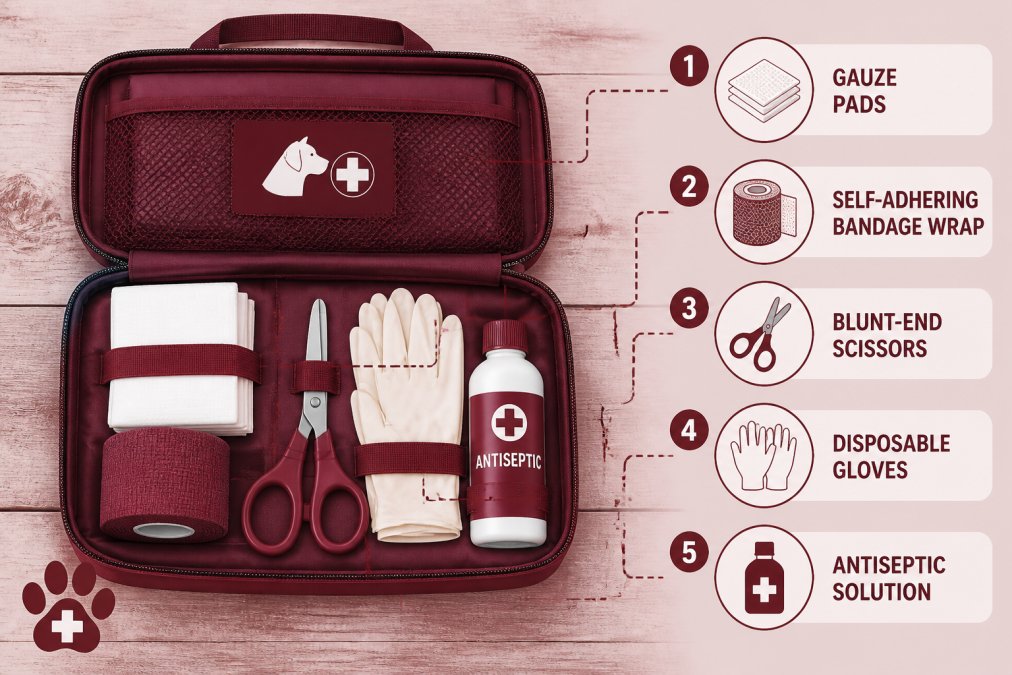
Wound Irrigation and Hemostasis Supplies
Wound irrigation, flushing a wound with clean fluid to remove debris, bacteria, and foreign material, is the single most important step in field wound management.
Your kit should include:
- Sterile saline solution or clean water in a large syringe (60 mL) for wound irrigation
- Styptic powder to achieve hemostasis on minor cuts and nail injuries
- Absorbent gauze pads in multiple sizes (2x2 and 4x4 inches)
- Non-stick pads to place directly over wounds without adhering to tissue
- Disposable gloves
Avoid hydrogen peroxide on open wounds; it damages tissue at the cellular level and slows healing. Use sterile saline or clean water instead. According to the American Veterinary Medical Association's pet owner resources, hydrogen peroxide should not be used directly on wounds without specific veterinary guidance.
Bandaging and Dressing Materials
Proper bandaging protects a cleaned wound from contamination and reduces movement during transport to a veterinary facility.
Essential bandaging materials include:
- Self-adhering bandage wrap (cohesive or vet wrap) in 2-inch and 4-inch widths
- Sterile dressing pads to layer over non-stick pads
- Adhesive tape (medical-grade) to secure dressings where self-adhering wrap won't hold
- Blunt-end scissors to cut bandaging material safely near skin and fur
Always wrap from the bottom of the limb upward, and check that you can slip two fingers beneath the wrap after application. A wrap that's too tight can cut off circulation within minutes.
Tools, Medications, and Antiseptics for Your Dog First Aid Kit
Tools and medications give you real capability in the field. A dog first aid kit without the right tools is just a pile of gauze.
Handling and Restraint Tools
An injured dog in pain will bite, even a dog that has never shown aggression. This is a pain response, and it's predictable.
Essential handling tools:
- Soft muzzle, sized correctly for your dog's breed. Carry one per dog if you run a pack.
- Extra leash or slip lead for improvised restraint
- Pet carrier or transport crate if working in remote terrain
- Penlight or small flashlight to examine mucous membranes and oral cavity in low light
A soft muzzle is the most underused item in most field kits. A muzzle protects both your dog and you, and a calm, restrained dog is far easier to treat effectively.
Medications, Antiseptics, and Vital Signs Monitoring
Antiseptic solution (chlorhexidine-based, diluted per label instructions) is the preferred choice for cleaning wound margins after irrigation. Keep it in a small, labeled bottle.
For vital signs monitoring, your kit should include:
- Digital thermometer (rectal), normal canine temperature is 101 to 102.5°F
- Watch or phone timer to count respiratory rate and pulse
- A written reference card covering normal ranges for heart rate, respiratory rate, capillary refill time, and mucous membrane color
Capillary refill time is the time it takes for color to return to the gums after pressing them with your finger. Normal is under two seconds. A prolonged refill time signals circulatory compromise and is a red flag for immediate veterinary emergency transport.
Carry a small notebook or laminated card with your dog's baseline vitals. You won't remember them accurately under stress.
| Supply Category | Key Items | Why It Matters |
|---|---|---|
| Wound Irrigation | Saline, 60 mL syringe, styptic powder | Removes debris, controls minor bleeding |
| Dressing | Non-stick pads, absorbent gauze, sterile dressing | Protects wound from contamination |
| Bandaging | Self-adhering wrap, adhesive tape, blunt-end scissors | Secures dressing, limits movement |
| Handling | Soft muzzle, slip lead, pet carrier | Safe restraint of injured dog |
| Monitoring | Digital thermometer, reference card | Tracks vital signs for triage |
| Antiseptics | Chlorhexidine solution, disposable gloves | Prevents infection |
Step-by-Step Triage Decision Tree for Field Emergencies
Triage is the process of rapidly assessing an injured animal to prioritize care and determine urgency.
Use this framework the moment your dog is injured:
- Is the dog breathing? If not, begin rescue breathing and move immediately to emergency transport.
- Is there uncontrolled bleeding? Apply direct pressure with absorbent gauze pads for a minimum of three minutes. If bleeding continues, apply a pressure bandage and transport immediately.
- Can the dog bear weight? Non-weight-bearing on a limb after trauma suggests fracture or severe soft tissue injury. Stabilize with a splint if available; do not force the dog to walk.
- What are the vital signs? Check mucous membrane color (should be pink), capillary refill time (under two seconds), heart rate (60-140 bpm depending on size), and temperature (101-102.5°F). Deviations require veterinary emergency care.
- Is the dog conscious and responsive? Altered consciousness, seizures, or unresponsiveness require immediate emergency transport.
The goal of field triage is stabilization, not treatment. Your job is to keep the dog calm, prevent the injury from worsening, and get to a veterinarian.
Your Veterinary Emergency Contact List
A veterinary emergency contact list is a pre-prepared card containing phone numbers, addresses, and hours of every veterinary resource you might need during an emergency, assembled before you ever need it.
Build yours before you leave home. Include:
- Your primary veterinarian's name, phone number, and after-hours emergency line
- The nearest 24-hour emergency veterinary clinic to your hunting or camping area
- The ASPCA Animal Poison Control Center hotline (available 24/7, a consultation fee applies)
- Your dog's microchip number and registration details
- Any known allergies, current medications, and chronic conditions
The ASPCA Animal Poison Control Center, accessible through the ASPCA's official poison control resources, is the most reliable poison control resource for dogs. If your dog ingests a toxin in the field, call before you drive; they can tell you whether emergency transport is urgent.
Keep a laminated copy of this emergency contact card inside your dog first aid kit and a digital copy on your phone.
DIY Pet First Aid Kit vs. Pre-Made Kits: Which Is Right for You?
Most handlers eventually ask this question. The honest answer: both have real trade-offs, and the right choice depends on your experience level, the number of dogs you run, and how remote your terrain is.
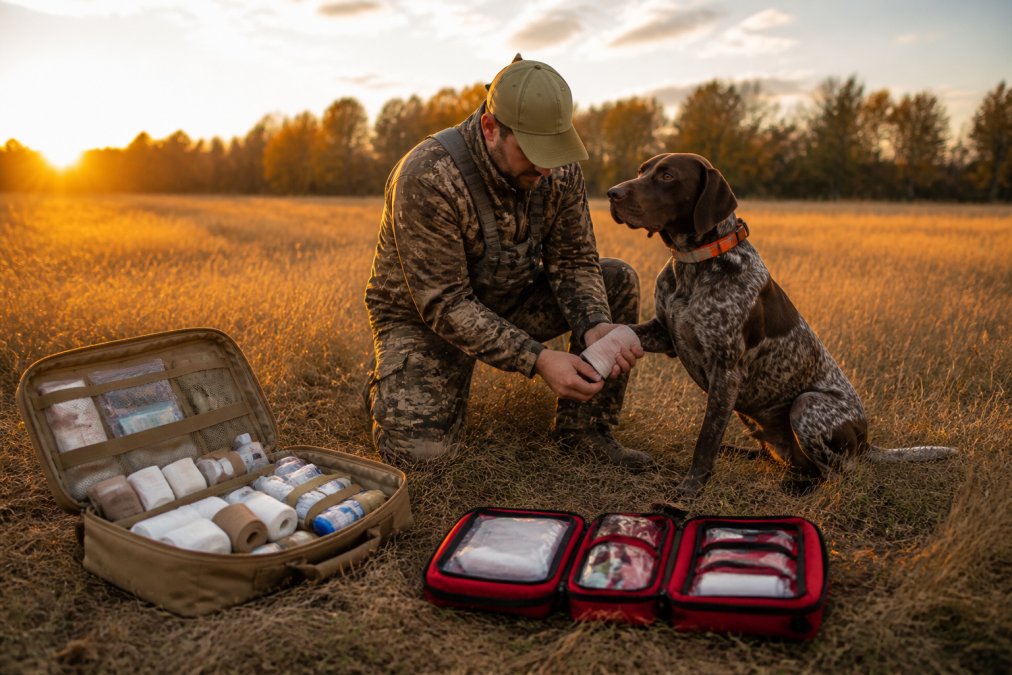
Pre-made kits are fast to deploy and require no assembly knowledge. Many consumer-grade pre-made kits are stocked with minimal supplies, undersized for large or working breeds, and contain items that expire quickly without tracking. If you're buying a pre-made kit, verify the contents against this checklist before you trust it in the field.
DIY pet first aid kits let you customize for your specific dogs, terrain, and risk profile. A handler running three large hounds in rocky terrain needs more gauze, larger bandaging material, and a second muzzle compared to someone hiking with a single retriever.
dogsRtreed's medical kits are designed for working conditions, with contents appropriate for both animals and humans. They reflect over 50 years of field experience, not a generic consumer checklist.
Breed-Specific Additions for Working and Hunting Dogs
Standard dog first aid kit checklists don't account for breed-specific risk profiles. Working and hunting dogs face hazards that companion dogs rarely encounter.
For large hounds and scent hounds: Ear injuries are common in dogs that push through dense cover. Add ear cleaning solution and cotton balls. Pad injuries from rough terrain are frequent; Paws R Protected balm from dogsRtreed supports skin integrity and wound recovery on paws exposed to sharp rocks and hot ground.
For retrievers and water dogs: Waterborne pathogens are a real risk. Carry oral rehydration support and know the signs of leptospirosis exposure.
For short-coated breeds in cold terrain: Hypothermia risk is higher. Add a compact emergency thermal blanket.
For all working dogs: Carry an extra dose of any prescription medication your dog takes.
Pet First Aid Kit Expiration Dates: A Simple Tracking System
Pet first aid kit expiration dates are the most overlooked element of emergency preparedness. A kit stocked with expired supplies is a false sense of security.
Most consumables expire within one to three years. Antiseptic solutions, sterile saline, and medications have the shortest shelf lives. Bandaging materials and tools last longer but should still be inspected annually for moisture damage, brittleness, or contamination.
Use this three-step tracking system:
- Label everything on assembly. Write the expiration date on a piece of tape stuck to the outside of each item.
- Audit twice a year. Pick two fixed dates; many handlers use the spring and fall time changes as reminders. Pull everything out, check dates, replace expired items, and restock anything you've used.
- Keep a restock list inside the kit. A small notepad or laminated checklist inside the lid lets you note items that need replacement without relying on memory.
According to the FDA's guidance on medical product expiration dates, expiration dates on sterile medical products represent the manufacturer's guarantee of sterility and potency through that date. Using expired sterile products in wound care carries real infection risk.
How to Store Your Kit and Prepare for Disaster Scenarios
Storage conditions determine whether your supplies are viable when you need them. Heat, moisture, and UV exposure degrade almost every item in a dog first aid kit faster than the labeled expiration date.
Storage best practices:
- Keep your kit in a hard-sided, waterproof container. Soft bags offer no protection against compression, moisture, or impact.
- Store at room temperature, away from direct sunlight. Vehicle storage in summer degrades antiseptic solutions and medications quickly.
- For multi-day field trips, use a secondary sealed bag inside the main container to protect sterile dressings from humidity.
Disaster preparedness considerations:
For handlers who travel frequently or operate in areas prone to natural disasters, your dog first aid kit should be part of a larger emergency preparedness plan. The Ready.gov guidance on pet emergency preparedness recommends keeping a 72-hour supply of food, water, and medications for each pet in your emergency kit, alongside a copy of pet health records and vaccination documentation.
A pet carrier rated for your dog's weight should be accessible within minutes, not buried in storage. If you run multiple dogs, plan your transport logistics before an emergency, not during one.
Conclusion
Building a complete dog first aid kit takes less than an hour and costs far less than a single emergency veterinary visit. The real challenge is maintaining it, knowing how to use it, and customizing it for your specific dogs and terrain. dogsRtreed's medical kits are built for working conditions, with supplies suitable for both animals and humans, backed by decades of field experience. Pair a quality kit with the Paws R Protected balm for ongoing paw protection and the 2-step hydration and nutritional recovery system for post-incident support. Add to cart and make sure you're prepared before your next trip into the field.
Frequently Asked Questions
What should a dog first aid kit contain?
A complete dog first aid kit should include absorbent gauze pads, non-stick pads, self-adhering bandage wrap, adhesive tape, blunt-end scissors, disposable gloves, a digital thermometer, antiseptic solution, styptic powder, hydrogen peroxide, eye wash, and a soft muzzle. Also pack your pet health records, an emergency contact card with your veterinarian's number, and the ASPCA Animal Poison Control hotline. Working and hunting dogs benefit from additional paw protection products and wound irrigation supplies.
How do I build a DIY pet first aid kit?
Start with a waterproof, clearly labeled container. Add wound care supplies first: sterile gauze pads, non-stick dressings, self-adhering bandage wrap, and adhesive tape. Then add tools: blunt-end scissors, disposable gloves, a digital thermometer, and a soft muzzle. Include antiseptic solution, styptic powder, and hydrogen peroxide. Finish with your veterinary emergency contact list, pet health records, and a laminated triage reference card. Review and restock every six months, replacing any items past their expiration dates.
Are human first aid kits safe for dogs?
Standard human first aid kits share several useful items with a dog kit, including gauze pads, bandage wrap, blunt-end scissors, and disposable gloves. However, many human medications are toxic to dogs, including ibuprofen, acetaminophen, and certain antiseptic wipes containing benzalkonium chloride. Never administer human medications without direct veterinary guidance. A purpose-built dog first aid kit, or a carefully assembled DIY pet first aid kit, ensures every item is safe for canine use.
How often should I check my dog's first aid supplies for expiration?
Audit your dog first aid kit every six months, a good habit is to check it when you change smoke detector batteries. Pay closest attention to pet first aid kit expiration dates on hydrogen peroxide, antiseptic solution, eye wash, and any medications. Sterile dressings and gauze also degrade over time, especially in humid or high-heat storage environments common in truck beds or hunting packs. Replace expired items immediately and log the new expiration dates on a card inside the kit lid.
What should I include in a dog emergency go-bag for hunting or camping trips?
For field use, your dog emergency go-bag should prioritize portability and trauma management. Pack sterile gauze, self-adhering bandage wrap, styptic powder for nail or pad bleeding, blunt-end scissors, disposable gloves, a digital thermometer, and a soft muzzle. Add paw protection balm for rough terrain, a collapsible water bowl for hydration, and a copy of your veterinary emergency contact list. Include your dog's vaccination records and any prescription medications. A compact pet carrier or emergency stabilization wrap rounds out a field-ready kit.
What are the most important items for breed-specific first aid in working dogs?
Hunting and working breeds face higher exposure to paw injuries, lacerations, and overheating. Beyond the standard dog first aid kit contents checklist, these dogs benefit from paw protection balm rated for hot and rocky terrain, additional non-stick pads sized for larger wounds, extra self-adhering bandage wrap for leg injuries, and a hydration and electrolyte recovery system. Brachycephalic breeds need close monitoring of mucous membrane color and capillary refill time during any stress or heat event. Always tailor your kit to the specific demands of your dog's work.
This article was written using GrandRanker