
How to Keep Dogs Hydrated While Hunting
Table of Contents
- How Much Water Does a Bird Dog Need Per Hour
- Signs of Dehydration in Dogs You Can't Afford to Miss
- How to Keep Dogs Hydrated While Hunting: A Step-by-Step Field Plan
- Electrolytes for Hunting Dogs: When Water Alone Isn't Enough
- Packing Water and Gear for Field Hydration
- Breed-Specific and Senior Dog Hydration Considerations
- Cooling Techniques and Preventing Heat Exhaustion
- Conclusion
Last Updated: August 15, 2026
How Much Water Does a Bird Dog Need Per Hour
A working bird dog needs roughly half a liter of water per hour of active hunting in moderate conditions, climbing fast when temperatures rise or terrain gets rough. Dogs cool themselves almost entirely through panting, which burns through fluid reserves quickly.
Several variables push water intake higher:
- Temperature above 70°F: Heat stress accelerates fluid loss through panting
- Low humidity: Dry air pulls moisture from airways faster
- Dense cover: Dogs working heavy brush exert more energy per acre
- Breed and body size: Larger sporting dogs need proportionally more volume
- Senior dogs: Older dogs regulate temperature less efficiently
Offer water every 30 minutes during active hunting, regardless of whether your dog seems thirsty. Thirst is a lagging indicator in dogs, by the time a sporting dog shows obvious interest in water, field endurance is already compromised.
According to American Kennel Club hydration guidelines for working dogs, working dogs in warm conditions can require significantly more water than their resting requirements, making proactive hydration strategy essential for any handler.
Signs of Dehydration in Dogs You Can't Afford to Miss
Most hunters can spot a dog that's run out of gas. Fewer can spot a dog running out of fluid before the crash happens. Dehydration symptoms in working dogs are often subtle until they're not.
Watch for these early warning signs during active hunting:
- Panting rate excessive relative to exertion level
- Reduced drive or reluctance to work cover
- Thick, ropy saliva instead of clear and fluid
- Mucous membranes that look pale or tacky rather than pink and moist
- Eyes that appear sunken or dull
The Skin Turgor Test and Mucous Membrane Check
The skin turgor test is the fastest field diagnostic for dehydration. Gently pinch the skin at the back of the neck, lift it slightly, and release. In a well-hydrated dog, the skin snaps back immediately. In a dehydrated dog, the skin returns slowly or holds a tent shape.
Mucous membrane color tells you even more. Lift your dog's lip and press a finger firmly against the gum for two seconds. Release and count. In a healthy, hydrated dog, pink color returns within two seconds. A return time of three seconds or longer, or pale, white, or grayish gums, signals a serious problem requiring immediate shade, water, and potentially veterinary attention.
These two checks take under 30 seconds and should become automatic at every water break.
How to Keep Dogs Hydrated While Hunting: A Step-by-Step Field Plan
Effective hydration comes down to a plan you build before leaving the truck, not one you improvise when a dog starts struggling.
Step 1: Pre-Hunt Hydration Loading
Start hydration the night before. Ensure your dog has free access to fresh water through the evening and limit strenuous play. On hunt morning, offer water 30 to 60 minutes before the first cast. A dog that begins the hunt well-hydrated has a meaningful buffer before fluid replenishment becomes urgent.
Avoid feeding a large meal immediately before hunting. A full stomach combined with vigorous activity increases the risk of GI distress and bloat, a life-threatening condition in deep-chested sporting breeds.
Step 2: Scheduled Water Breaks During the Hunt
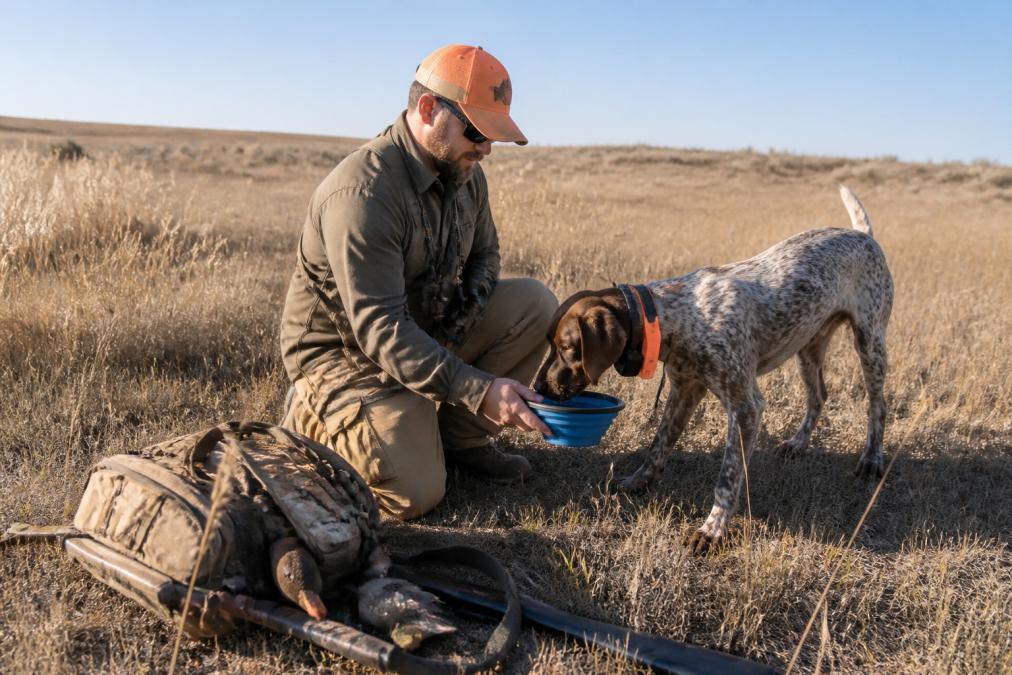
Set a timer. Every 30 minutes during active hunting, call your dog in and offer water. Do not wait for the dog to seek water on its own.
Offer water in a portable, clean bowl rather than letting dogs drink from puddles or standing water. Natural water sources carry real risks: waterborne pathogens like Giardia and Leptospira are common in ponds, streams, and wetlands. According to CDC guidance on waterborne diseases in animals, Leptospirosis is a bacterial infection spread through water contaminated by wildlife urine, and hunting dogs that regularly access natural water sources face elevated exposure risk.
Carry your own fresh water supply.
Step 3: Post-Hunt Recovery and Fluid Replenishment
Post-hunt recovery is when many handlers drop the ball. A dog that has worked hard for three or four hours needs gradual fluid replenishment, not a single large drink.
Offer water in moderate amounts every 10 to 15 minutes for the first hour after hunting ends. If the dog has worked in heat or for an extended period, plain water alone may not be enough to restore electrolyte balance.
Electrolytes for Hunting Dogs: When Water Alone Isn't Enough
Plain water replenishes fluid volume but does not replace the electrolytes lost through sustained panting and exertion. Sodium, potassium, and chloride regulate muscle function, nerve signaling, and cellular hydration. A dog drinking but still performing poorly may be dealing with electrolyte depletion rather than simple dehydration.
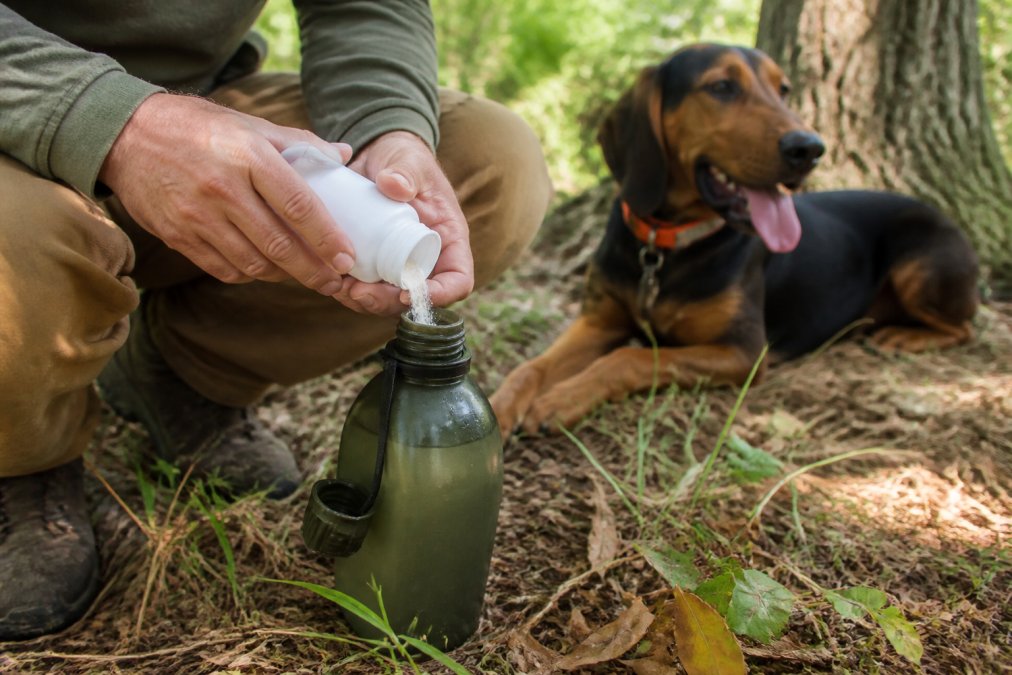
The dogsRhydrated Hydration and Energy Recovery System was built to address this gap. Backed by over 50 years of professional dog handling experience, it is a 2-step system designed to restore both fluid and nutritional recovery in working dogs.

| Situation | Water Alone | Electrolyte System |
|---|---|---|
| Short hunt under 2 hours, mild temps | Sufficient | Optional |
| Hunt over 2 hours, any temperature | Insufficient | Recommended |
| Hunt in temps above 75°F | Insufficient | Strongly recommended |
| Post-hunt recovery after heavy exertion | Partial | Essential |
| Senior dog or breed prone to heat stress | Insufficient | Strongly recommended |
Never use human sports drinks as an electrolyte substitute. Many contain xylitol, which is toxic to dogs. Use only products formulated specifically for canine physiology.
Packing Water and Gear for Field Hydration
Field hydration gear is part of your kit the same way shells and a first-aid kit are.
A practical field hydration kit includes:
- Insulated water containers that keep water cool in heat
- Collapsible bowls that pack flat
- A minimum of one liter of fresh water per dog per hour of planned hunting
- Electrolyte supplement sachets for hunts over two hours or in warm conditions
- A pull-up spout bottle for hands-free offering between formal water breaks
DIY vs. Commercial Hydration Gear
DIY hydration setups work fine for casual, short hunts in mild conditions. A clean plastic bottle and collapsible silicone bowl cover most situations for two-hour hunts on cool mornings.
Commercial hydration gear earns its keep in demanding conditions. Insulated bottles maintain water temperature significantly longer. Vest-mounted water systems distribute weight evenly and keep hands free. Some integrate directly with dog packs, allowing the dog to carry a portion of their own water weight.
Most hunters need a middle-ground approach: invest in a quality insulated container and collapsible bowls, add a purpose-built electrolyte system for long or hot hunts, and save full commercial vest systems for multi-day hunts or extreme heat conditions.
According to [Cornell University College of Veterinary Medicine resources on working dog care(/products/heat-dog-care-product-bundle) | vet.cornell.edu], proactive hydration management is one of the most impactful interventions a handler can make for working dog health and longevity.
Breed-Specific and Senior Dog Hydration Considerations
Not every hunting dog has the same fluid demands. Breed-specific hydration needs are real and worth understanding before you head out.
Deep-chested sporting breeds including German Shorthaired Pointers, Weimaraners, and Irish Setters face elevated bloat risk when large volumes of water are consumed rapidly after exertion. Always offer water in smaller, frequent amounts rather than allowing unrestricted access immediately after hard running.
Heavier-coated breeds like Labrador Retrievers and Springer Spaniels retain more body heat in warm conditions. Their water requirements in temperatures above 70°F are meaningfully higher than lean-coated breeds of similar size.
Senior hunting dogs deserve particular attention. Older dogs have reduced kidney efficiency and regulate body temperature less effectively. A 10-year-old hunting dog in the same conditions as a 3-year-old needs more frequent water breaks, earlier shade management, and closer monitoring for dehydration symptoms.
For senior dogs: shorten water break intervals to every 20 minutes rather than 30, limit hunting to cooler parts of the day, and consider adding an electrolyte supplement as a standard part of every hunt.
Cooling Techniques and Preventing Heat Exhaustion
Heat exhaustion in dogs is a veterinary emergency that develops faster than most handlers expect. Prevention is the only reliable strategy.
Shade management is the most underused tool in field hunting. Plan your route to include natural shade at regular intervals. During water breaks, always move dogs into shade before offering water.
Wet-down cooling works by helping the dog's own thermoregulation. Pour cool water over the paws, groin, and neck, areas with higher surface blood flow that cool the dog more efficiently. Avoid ice water, which can cause peripheral vasoconstriction and actually slow cooling.
Paw protection matters. Hot ground, sharp rocks, and dry terrain damage paw pads, affecting gait and increasing overall physical stress. The DOG CARE HEAT PRODUCT BUNDLE from dogsRtreed combines heat care essentials, including paw protection for dogs working in rough, hot conditions.

If a dog shows signs of heat exhaustion (collapse, disorientation, rapid or shallow breathing, extremely red mucous membranes), wet the dog with cool water immediately, move to shade, and get to a veterinarian. As noted in AVMA guidance on heat stroke in dogs, heat stroke in dogs requires immediate veterinary intervention and can be fatal without prompt treatment.
A practical cooling checklist for every hunt day:
- Check morning temperature and humidity before leaving
- Plan route to include shade at 30-minute intervals
- Carry cool water, not just ambient-temperature water
- Offer water every 30 minutes regardless of dog's apparent thirst
- Wet paws and groin area at each water break in temperatures above 75°F
- Know the nearest emergency veterinary clinic before you go out
Working dogs give everything they have. Preventing heat exhaustion is how you make sure they can do it again tomorrow.
Keeping a hunting dog healthy and performing at its best across a long season comes down to consistent hydration habits and the right gear in your pack. The dogsRhydrated Hydration and Energy Recovery System was built specifically for working dogs that push hard in demanding conditions, drawing on over 50 years of professional handling experience. Pair it with a solid field hydration plan and you have a complete system for keeping your dog cool, hydrated, and ready for the next cast. Add it to your kit before your next hunt.
Frequently Asked Questions
How much water should a hunting dog drink per hour?
A working bird dog or sporting dog can need roughly 0.5 to 1 ounce of water per pound of body weight over the course of an active hunting day. During intense field work in warm conditions, that demand spikes significantly. A good rule of thumb is to offer water every 15 to 30 minutes rather than waiting for visible thirst, since dogs in active hunting mode often suppress thirst signals until dehydration is already underway.
What are the early signs of dehydration in hunting dogs?
Early signs of dehydration in dogs include a dry or tacky nose, reduced panting efficiency, sunken eyes, and dark-colored urine. The skin turgor test is reliable: pinch the skin at the back of the neck and release it. In a well-hydrated dog, skin snaps back immediately. Delayed return indicates dehydration. Pale or dry mucous membranes inside the mouth are another clear warning. Catching these signs early prevents heat exhaustion and serious GI distress.
Can I add electrolytes to my hunting dog's water?
Yes, and for hard-working sporting dogs it is often a smart move. Sustained activity depletes sodium, potassium, and other minerals through panting and sweat, disrupting electrolyte balance and accelerating fatigue. A purpose-formulated canine electrolyte and energy recovery system, like the dogsRhydrated Hydration and Energy Recovery System, replenishes these minerals and can encourage dogs that resist plain water to drink more readily. Avoid human sports drinks, which contain sugar levels and additives not suited to canine physiology.
How do you hydrate a dog that won't drink water in the field?
Dogs that refuse plain water mid-hunt often respond to flavored or electrolyte-enhanced water, which changes the smell and taste enough to trigger drinking. You can also add a small amount of low-sodium broth to the water or float a piece of their regular food in the bowl. Offering water from a familiar container rather than a strange puddle also helps. Cooling the water slightly makes it more appealing in hot conditions. If a dog still refuses after multiple attempts, treat it as a dehydration warning and rest the dog in shade immediately.
This article was written using GrandRanker