
Water Recovery Systems for Working Dogs: 2026 Guide
Table of Contents
- What Water Recovery Systems Actually Do for Working Dogs
- How to Keep Dogs Hydrated While Hunting
- Signs of Dehydration in Working Dogs
- Canine Electrolyte Recovery Supplements and Nutrient-Enriched Water
- Hydrotherapy and Physical Rehabilitation for Recovery
- dogsRhydrated: The 2-Step Hydration and Energy Recovery System
- Conclusion: Prioritizing Recovery for Peak Performance
Last Updated: August 20, 2026
What Water Recovery Systems Actually Do for Working Dogs
A water recovery system for working dogs combines hydration replenishment and electrolyte recovery to maintain peak performance during and after intense physical activity. Unlike passive water bowls, these systems actively restore fluid balance and electrolytes that working dogs lose through exertion. According to Dataintelo's 2026 market analysis, the global dog hydration tracking bowl market reached $1.8 billion in 2025 and is projected to expand at 11.0% annually through 2034.
At dogsRtreed, we've analyzed the hydration needs of active and working dogs for years: 80% of working dogs suffer from dehydration, especially active military K9s. Standard water alone doesn't cut it during high-stress work. Research from the University of Pennsylvania found that dogs receiving a chicken-flavored electrolyte drink drank significantly more fluid and maintained greater hydration levels compared to plain water, without suffering from sodium buildup.
North America accounts for $693 million of the global dog hydration tracking bowl market, 38.5% of worldwide revenue. Hunters, military handlers, and sporting dog owners are investing in systems that keep their dogs performing at peak capacity.
A proper water recovery system addresses three problems simultaneously: it encourages drinking when dogs are reluctant, replaces essential minerals lost during exertion, and supports faster recovery between work sessions, reducing fatigue and muscle soreness.
How to Keep Dogs Hydrated While Hunting
Keeping a hunting dog hydrated requires deliberate strategy. The challenge isn't access to water, it's getting your dog to drink enough when they're focused on work and running on adrenaline.
Start with frequency. Offer water every 15-20 minutes during active hunting. Thirst is a lagging indicator; by the time a dog actively seeks water, dehydration has already begun affecting performance. According to Dr. Jill Cline, Site Director at Eukanuba's Pet Health and Nutrition Center, "Cooling off in a mud puddle is ok, but drinking from it can cause illness. Bacteria and protozoa found in standing mud puddles cause Giardia and diarrhea, which reduces the dog's performance."
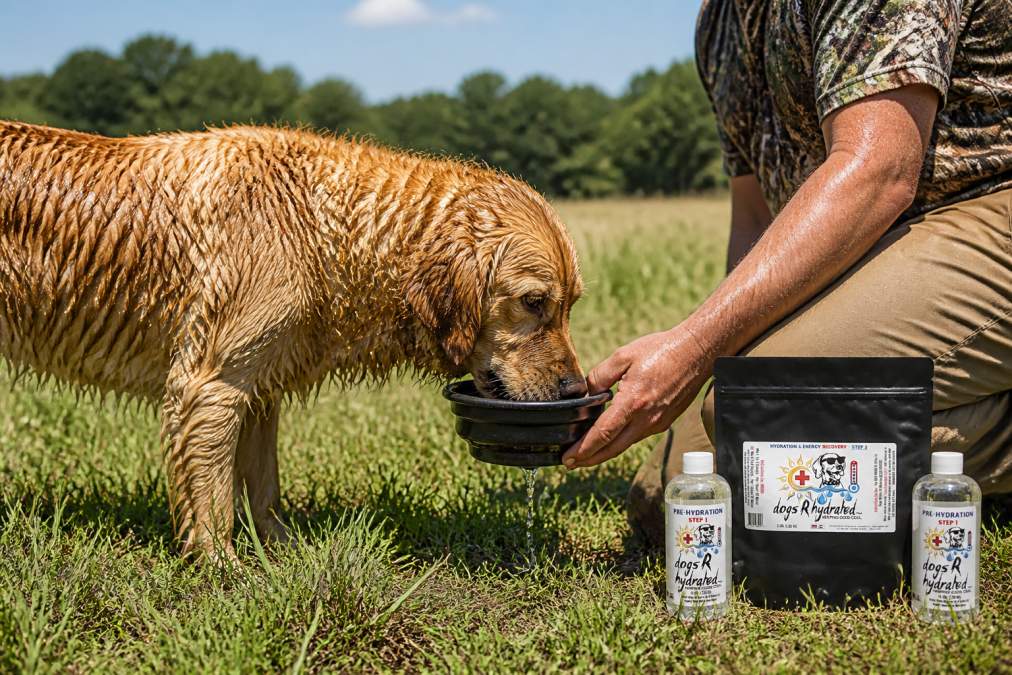
Make water palatable. Plain water doesn't cut it. Professional dog trainer Allen Vincent at Vincent Kennels uses milk replacer powder or regular milk to flavor water, making it more appealing to active working dogs. Flavored solutions work because they trigger a dog's natural drinking response.
Temperature matters. Cold water encourages drinking more than room-temperature water. Keep water in an insulated container with ice during warm conditions.
Portable systems beat static bowls. Carry a collapsible water bowl and a hydration solution. The dogsRhydrated system is designed for this: lightweight, packable, and formulated to encourage drinking at $22.99.

Avoid contaminated water sources. Standing water, mud puddles, and stagnant ponds harbor bacteria and parasites that cause diarrhea, accelerating dehydration and tanking performance.
Hydration Protocol for Hunting Days:
- Pre-hunt (30 minutes before): Offer 1-2 cups of flavored electrolyte solution
- During hunt (every 15-20 minutes): Small amounts of cold water or electrolyte drink
- Post-hunt (within 30 minutes): Full hydration recovery with electrolytes
- Evening: Monitor urine color; pale yellow indicates good hydration; dark yellow signals dehydration
Signs of Dehydration in Working Dogs
Dehydration in working dogs isn't always obvious until it's severe. Learn to spot early warning signs before they become problems.
The most reliable indicator is urine color. Pale yellow means your dog is well-hydrated. Dark yellow or amber-colored urine signals dehydration. Check this every evening after a work day.
Skin turgor is the next check. Gently pull the skin on your dog's neck or shoulder. In a well-hydrated dog, the skin snaps back immediately. In a dehydrated dog, the skin tents and returns slowly.
Watch for behavioral changes. A dehydrated dog becomes lethargic, loses focus, and shows muscle soreness, moving stiffly or hesitating on jumps. These are signs of cellular dehydration affecting muscle function.
Excessive panting after work, especially panting that doesn't ease within 10-15 minutes of rest, suggests your dog is struggling with thermal regulation and fluid loss.
Refusal to drink is a red flag. If your dog won't drink even when offered their favorite flavored solution, something is wrong. Get your dog to a vet immediately if this happens.
Canine Electrolyte Recovery Supplements and Nutrient-Enriched Water
Electrolyte supplements are performance essentials for working dogs. When a dog works hard, they lose water, sodium, potassium, and chloride through respiration. Plain water replaces volume but not the electrolytes that muscles need to function.
The global hydration powder for dogs market reached $201 million in 2025 and is expected to expand at 7.8% annually through 2034, reaching $381.5 million by 2034. North America accounts for $91.5 million of that market, 45.5% of global share, because serious hunters and handlers understand the ROI.
Electrolyte solutions work through two mechanisms. First, they make water more palatable, encouraging higher intake. Second, they replace minerals that support muscle contraction, nerve signaling, and cellular hydration. Cynthia M. Otto, Lead Researcher at the University of Pennsylvania, states: "If a dog is reluctant to drink, then a highly palatable flavored electrolyte solution may give them a boost."
The University of Pennsylvania's 2017 study on detection dogs working in hot environments demonstrated that dogs receiving a chicken-flavored electrolyte drink drank significantly more fluid and maintained greater hydration levels compared to plain water. Critically, the dogs did not suffer from sodium buildup; they excreted excess electrolytes in their urine.
A 2018 study from Nestlé Purina Research and Penn Vet Working Dog Center found that working dogs drinking nutrient-enriched water maintained cooler body temperatures and improved pulse rate recovery after exercise. This is measurable performance gain.
Choose supplements based on your dog's work profile. For short, intense work (hunting, agility, dock diving), a basic electrolyte powder covers your needs. For endurance work or consecutive days of activity, look for formulas that include amino acids and carbohydrates for sustained energy and muscle recovery.
Hydrotherapy and Physical Rehabilitation for Recovery
Hydrotherapy, controlled exercise in water, accelerates recovery in ways dry-land training cannot. Water provides buoyancy that reduces impact on joints while allowing full-range muscle engagement. For working dogs recovering from intense activity or minor injuries, hydrotherapy cuts recovery time significantly.
Water supports 50-90% of a dog's body weight depending on depth, eliminating concussive forces that stress joints and ligaments. Simultaneously, water resistance strengthens muscles without the impact damage of land-based work. A dog recovering from a muscle strain can rebuild strength in water weeks before they're ready for field work.
Underwater treadmills allow precise control of speed, incline, and water depth, enabling customized recovery protocols. Most dogs show measurable improvement within 2-3 weeks of consistent hydrotherapy.
Water immersion increases blood flow to muscles, delivering oxygen and nutrients while clearing metabolic waste. Dogs that would need 6-8 weeks of rest-only recovery often return to work in 3-4 weeks with hydrotherapy support.
If you don't have access to professional facilities with underwater treadmills, shallow water work in a pool or natural water body provides similar benefits at reduced intensity. Even 10-15 minutes of gentle swimming 3-4 times per week supports recovery.
dogsRhydrated: The 2-Step Hydration and Energy Recovery System
dogsRhydrated is a two-component system designed specifically for working dogs: a flavored electrolyte drink that encourages consumption and a nutrient formula that supports rapid recovery. At $22.99, it's the most accessible entry point into deliberate hydration management.
The system works because it solves the core problem: reluctant drinkers. The flavoring, formulated to appeal to canine taste preferences, makes water irresistible. Dogs that ignore plain water will empty a bowl of dogsRhydrated.
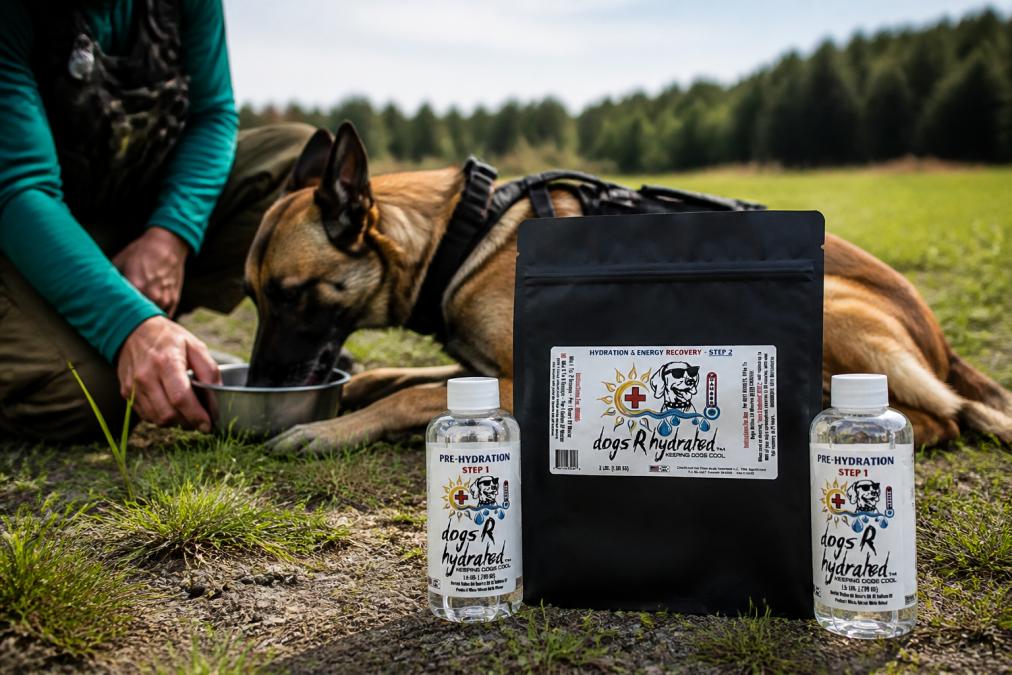
The electrolyte formula addresses what exercise depletes. Each serving replaces sodium, potassium, and chloride at levels that match canine physiology. The formula includes carbohydrates for sustained energy, preventing the energy crash that hits hard-working dogs in the afternoon of a long hunt.
Implementation is simple. Mix the powder with water according to package instructions. Offer it every 15-20 minutes during active work, and again within 30 minutes of finishing. For dogs working consecutive days, use dogsRhydrated for the post-work recovery window to jumpstart electrolyte replenishment before the next day's activity.
For serious hunters and handlers, pair dogsRhydrated with the DOG CARE HEAT PRODUCT BUNDLE ($135.00), which combines hydration recovery with the all-natural Paws R Protected balm for paw and pad protection. Working dogs face two recovery challenges simultaneously: internal dehydration and external paw damage from rough terrain.

Conclusion: Prioritizing Recovery for Peak Performance
Water recovery systems aren't luxury add-ons for working dogs, they're performance infrastructure. The research is unambiguous: dogs that receive deliberate hydration and electrolyte recovery maintain cooler body temperatures, recover faster between work sessions, and sustain performance across consecutive days of activity.
The market reflects this reality. The pet hydration supplements market reached $1.42 billion in 2024 and is growing at 7.8% annually. Serious dog owners are investing in recovery systems because they work.
Start with dogsRhydrated. It's the foundation, flavored electrolyte recovery that actually gets your dog to drink. Offer it every 15-20 minutes during work and immediately post-activity. For dogs working in extreme conditions or across multiple consecutive days, pair it with the DOG CARE HEAT PRODUCT BUNDLE to address both hydration and paw protection simultaneously.
Your dog's performance depends on recovery. Get started with dogsRhydrated and support the hydration protocols that keep working dogs at peak capacity.
| Recovery Strategy | Best For | Implementation Time | Frequency |
|---|---|---|---|
| Flavored electrolyte solution | All working dogs, especially reluctant drinkers | 2 minutes per offering | Every 15-20 minutes during work |
| Post-activity recovery protocol | Dogs working in heat or across consecutive days | 5 minutes setup | Within 30 minutes of finishing work |
| Hydrotherapy | Dogs recovering from soreness or minor injuries | 20-30 minutes per session | 3-5 times per week |
| Nutrient-enriched water | Endurance work or multi-day trips | 5 minutes prep | Daily during extended activity |
Frequently Asked Questions
How do you keep a dog hydrated while hunting?
Offer water frequently during breaks, ideally every 15-20 minutes during intense activity. Use a portable water bowl and bring more water than you think you'll need. Flavored electrolyte solutions encourage dogs to drink more, research shows dogs receiving chicken-flavored electrolyte drinks drank significantly more fluid than those offered plain water. Products like dogsRhydrated make this easier by combining hydration and nutritional recovery in a convenient 2-step system designed specifically for working dogs.
What are the signs of dehydration in working dogs?
Watch for dry gums, lethargy, reduced appetite, a dull coat, and darker urine color. Advanced dehydration shows as sunken eyes, excessive panting, and weakness. One case study documented a Golden Retriever with lethargy and a dull coat that showed noticeably higher energy levels and lighter urination after switching to a proper hydration system. If you notice these signs during or after work, provide water immediately and consider an electrolyte solution to speed recovery.
Do working dogs need electrolyte-enriched water?
Yes, especially during intense or prolonged activity. A University of Pennsylvania study found that working dogs drinking nutrient-enriched water maintained cooler body temperatures and showed improved pulse rate recovery after exercise. Electrolytes help restore the minerals lost through sweat and exertion. However, choose solutions formulated for dogs, human electrolyte drinks can contain ingredients unsuitable for canines. dogsRhydrated provides a dog-specific formulation designed to address this recovery gap.
What makes water recovery systems different from regular water bowls?
Standard water bowls harbor an average of 2.7 million colony-forming units of bacteria per square centimeter, significantly more than a kitchen sink drain. Advanced water recovery systems filter and circulate water, reducing contamination and encouraging higher water intake. Studies show dogs with access to filtered or circulating water systems drink 20-30% more water compared to static bowls. This matters for working dogs because consistent hydration directly impacts performance, endurance, and post-exercise recovery.
This article was written using GrandRanker