
Best Dog Water Bottle for Long Hikes
Table of Contents
- How Much Water Does Your Dog Need on the Trail
- Key Features to Look for in a Dog Water Bottle for Long Hikes
- How to Keep Dogs Hydrated While Hunting and Hiking
- Top Dog Water Bottles for Long-Distance Hiking
- Dog Hydration Recovery Strategies for Extended Outdoor Activity
- Collapsible vs. Rigid Water Bottles: Which Works Best
- Conclusion
Last Updated: August 24, 2026
Dog owners who hike regularly face a critical challenge: keeping their canine companions properly hydrated on the trail. The best dog water bottle for long hikes isn't just about convenience, it's about preventing heat exhaustion, maintaining performance, and ensuring your dog returns home healthy. According to research from the American Veterinary Medical Association, approximately 45.5% of households have a dog as of 2024, making trail hydration a mainstream concern for active dog owners.
At dogsRtreed, we've spent decades working with hunting dogs, service dogs, and outdoor enthusiasts who depend on reliable hydration systems. We understand that the wrong water bottle creates friction on the trail: spills, difficulty drinking, excessive weight, or water that arrives too warm to appeal to a tired dog. The right bottle becomes invisible, lightweight enough to forget you're carrying it, efficient enough to keep your dog drinking, and durable enough to survive rough terrain.
This guide breaks down what separates effective trail hydration from frustrating gear that looks good on paper but fails in practice.
How Much Water Does Your Dog Need on the Trail
Your dog's water intake during hiking depends on body weight, trail intensity, temperature, and altitude. According to Dr. Jennifer Larsen, a veterinary nutritionist at the University of California, Davis, dogs need 0.5 to 1.0 ounces of water per pound of body weight per hour of hiking (ucdavis.edu). For a 60-pound dog on a moderate trail, that translates to 30-60 ounces per hour, roughly one to two standard water bottles' worth.
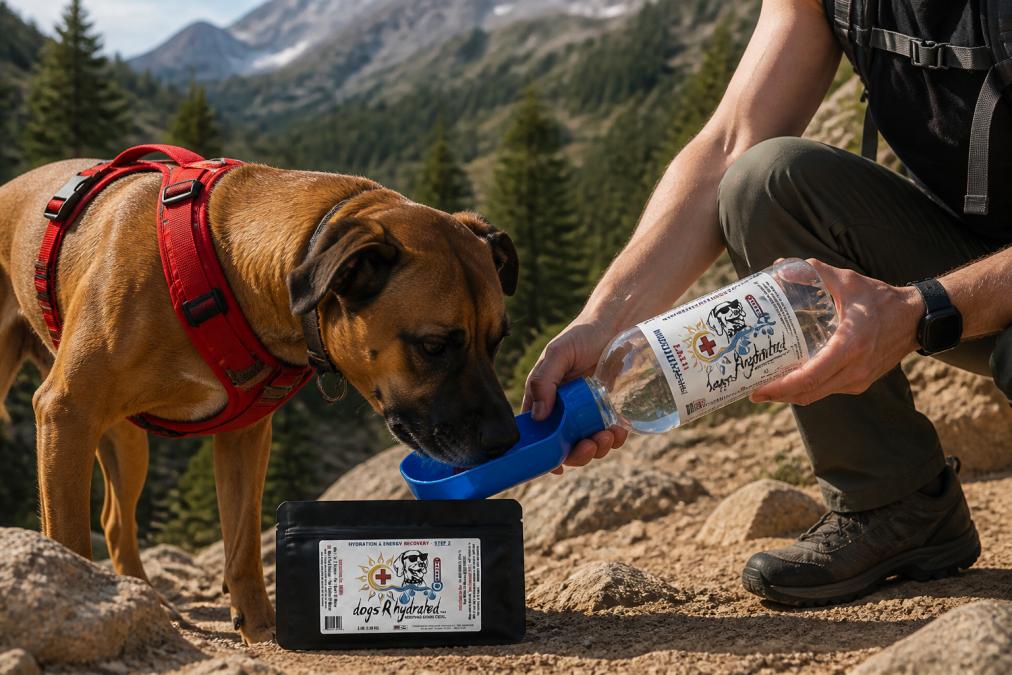
This guideline shifts dramatically with conditions. A dog working in hot weather or at high elevation needs more. A dog on a cool-weather trail in shade needs less. The mistake many hikers make is treating water needs as static. They bring one bottle and assume it's enough, only to watch their dog slow down or refuse to move by mile three.
Research from the University of Pennsylvania Working Dog Center demonstrates that dogs offered flavored hydration solutions consumed significantly more fluid than those given plain water alone, a critical advantage during demanding work in hot environments. This finding explains why some dogs seem to hit a wall mid-hike while others keep pace: dehydration isn't always about water availability; it's about whether the dog will actually drink.
The practical implication: bring more water than you think you need, and offer it frequently. A dog that drinks small amounts every 20-30 minutes stays better hydrated than one offered large amounts every hour. Thirst is a lagging indicator, by the time your dog actively seeks water, performance is already compromised.
For multi-dog packs, the math multiplies. A handler with two 50-pound dogs needs 50-100 ounces per hour. This is where bottle capacity and refilling strategy become critical decisions.
Key Features to Look for in a Dog Water Bottle for Long Hikes
The best dog water bottle for long hikes balances five competing demands: capacity, weight, durability, ease of use, and water temperature management. Not every bottle excels at all five, trade-offs are inevitable.
Capacity and weight relationship: A 40-ounce bottle carries more water but adds significant pack weight. For day hikes under three hours, a 20-ounce bottle often suffices. For longer trips or multi-dog situations, 27-40 ounces becomes necessary. The weight penalty is roughly 1.25 pounds per 20 ounces of water, so choose capacity based on actual need, not theoretical maximum.
Leak-proof design: A bottle that leaks in your pack transforms water into wasted weight and soggy gear. Look for bottles with silicone seals or dual-lock mechanisms. Collapsible bottles are prone to leaks at the seams; rigid bottles with bolt snaps offer more reliability.
Flow rate and bowl integration: Some bottles have integrated bowls that catch water as it pours; others require you to cup your hand or use a separate collapsible bowl. The integrated approach is faster but limits how much water you can offer at once. Separate bowls add ounces but give you flexibility.
Material safety: BPA-free, food-grade plastic or stainless steel are non-negotiable. Avoid bottles made from unknown plastics that degrade in sun or leach chemicals when warm. Stainless steel holds temperature better but weighs more.
Thermal regulation: Insulated bottles keep water cool for 12+ hours in hot weather, a genuine performance advantage. Uninsulated bottles warm quickly, and many dogs refuse warm water on hot days, which accelerates dehydration. The insulation adds 2-4 ounces of weight.
Attachment and portability: Carabiner loops, shoulder straps, or packable designs matter for hands-free carrying. A bottle that clips to your pack stays accessible without fumbling.
How to Keep Dogs Hydrated While Hunting and Hiking
Hydration strategy matters as much as equipment. The bottle is only part of the system.
Pre-hydration before the outing: Offer water 30-60 minutes before hitting the trail. A properly hydrated dog starts with an advantage. According to studies on competition sled dogs in Alaska, offering a solution of water mixed with 1% Glycerin kept those dogs' body temperature between 1 to 2 degrees lower than dogs that didn't receive it. This can be a meaningful buffer when heat exhaustion starts at 104 degrees and heat stroke at 106 degrees.
dogsRtreed's dogsRhydrated Pre-Hydration system ($22.99) uses a glycerin formula that absorbs rapidly across muscle cells, taking water with it. This approach is backed by decades of working dog protocols. Mix 10 milliliters of product per quart of water and offer it 30-60 minutes before activity.

Frequent small offerings: Offer water every 20-30 minutes rather than waiting until your dog asks. This prevents the performance cliff where dehydration suddenly becomes severe.
Post-exercise recovery hydration: The first 30 minutes after exercise are critical for recovery. Muscle cells have receptors seeking carbohydrate replenishment, and these receptors remain active only briefly. A nutrient-enriched recovery drink ingested within that window can replace up to 60% of carbohydrate loss, reducing cramping, soreness, and fatigue.
The dogsRhydrated Energy Recovery formula ($22.99 as part of the system, or bundled in the DOG CARE HEAT PRODUCT BUNDLE at $135.00) uses maltodextrin, a simple carbohydrate that enters the bloodstream quickly. Mix 1-2 scoops per quart and offer it within 30 minutes of stopping.
Watch for dehydration signs: Excessive panting, lethargy, dry gums, or reluctance to move signal trouble. A dehydrated dog won't recover fully on the trail, you're managing the remainder of the hike, not enjoying it. dog car seat covers.
Top Dog Water Bottles for Long-Distance Hiking
Lightweight and Collapsible Options
Springer Flip Dog Water Bottle, Best Overall for Day Hikers
The Springer Flip is the editorial pick for most day-hiking scenarios. It weighs just 4.9 ounces empty, holds 20 ounces, and uses a squeeze-to-fill design that returns unused water to the bottle rather than wasting it. The integrated bowl catches water as it pours, letting your dog drink directly without requiring a separate dish.
What works: The weight-to-capacity ratio is excellent for sub-five-hour hikes. The squeeze mechanism is intuitive. The bowl design is practical. Cleaning is straightforward, the bowl separates for thorough rinsing.
What doesn't: 20 ounces isn't enough for large dogs or extended trips. The plastic bowl scratches easily. On very hot days, water warms quickly without insulation.
Best for: Solo hikers with dogs under 50 pounds on moderate day trails.
PupFlask Portable Dog Water Bottle, Best for Large Dogs
The PupFlask comes in 27 or 40-ounce stainless steel options with a wide bowl designed specifically for larger breed muzzles. The insulation keeps water cold for 12 hours, a genuine advantage in summer hiking.
What works: Capacity handles larger dogs or multi-dog packs. Insulation is effective. Durability is excellent, stainless steel withstands rocky terrain. The wide bowl prevents spilling.
What doesn't: At 1.5-2 pounds empty, it's noticeably heavier than collapsible alternatives. The price point is higher. Cleaning the insulated chamber requires care to prevent mold.
Best for: Large breed owners, multi-dog handlers, and hikers in hot climates where water temperature matters.
Insulated Bottles for Hot Weather
Springer Insulated Dog Water Bottle, Best for Hot Weather Performance
This insulated variant keeps water cold for 12 hours, addressing the problem of dogs refusing warm water mid-hike. On a 90-degree day, the difference between cold and room-temperature water can determine whether your dog keeps drinking.
What works: Insulation is effective without excessive weight. The design maintains the lightweight ethos of the non-insulated Springer. Price is reasonable for the feature set.
What doesn't: Still limited to 20 ounces. Insulation adds cost. Not ideal for cold-weather hiking where maintaining temperature is less critical.
Best for: Warm-weather hikers, dogs sensitive to water temperature, and anyone hiking during summer months.
Heavy-Duty Options for Large Dogs
MalsiPree Heavy-Duty Dog Water Bottle, Best for Rugged Terrain
Built from reinforced plastic with a working load capacity designed for aggressive dogs and rough environments, the MalsiPree offers 32-ounce capacity and a leak-proof design with dual-lock seals.
What works: Durability is exceptional. Capacity is generous. The design handles neglect better than premium alternatives.
What doesn't: Weight is higher, approximately 1.8 pounds empty. The plastic is less refined than stainless steel alternatives. Insulation isn't available.
Best for: Serious backcountry hikers, working dog handlers, and anyone prioritizing durability over weight.
Dog Hydration Recovery Strategies for Extended Outdoor Activity
Extended outdoor activity, multi-day backpacking trips, hunting expeditions, or endurance events, demands a recovery strategy beyond basic hydration.
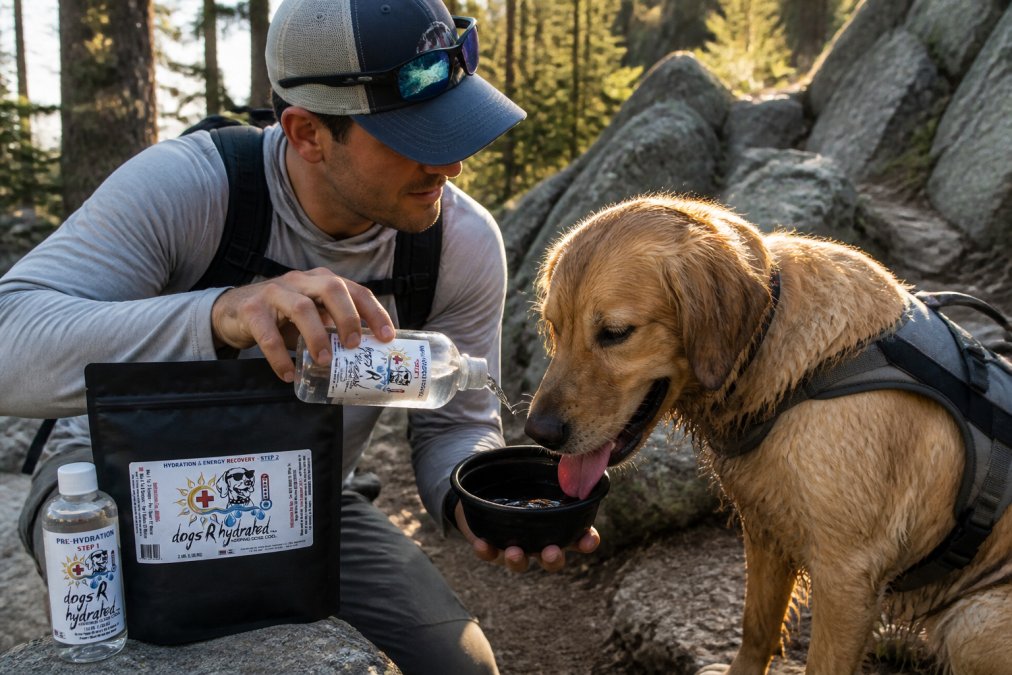
The 30-minute recovery window: Research from Nestlé Purina and the Penn Vet Working Dog Center shows that dogs drinking a nutrient-enriched water supplement within 30 minutes of exercise maintained cooler body temperatures and faster pulse rate recovery compared to controls. This is measurable performance gain.
Electrolyte supplementation: Plain water alone doesn't replace electrolytes lost through sweat and exertion. A dog that drinks plain water after intense activity may actually dilute their electrolyte balance, creating a different problem. Electrolyte-enhanced solutions address this directly.
Caloric replacement: A working dog burns significant calories. Recovery nutrition matters. The maltodextrin in dogsRhydrated's Energy Recovery formula provides rapid carbohydrate replenishment that muscle cells can use immediately.
Multi-day pacing: On trips longer than one day, hydration strategy shifts. You're not just managing individual hikes; you're managing cumulative fatigue. Offer recovery nutrition after each day's activity. Monitor your dog's water intake closely, a dog that stops drinking signals serious fatigue.
Paw protection during extended activity: Hydration is only part of recovery. Paw pads take a beating on long hikes. pawsRprotected Balm ($21.99) or the Animal Skin Spray ($27.99) should be part of your post-hike routine, applied to pads and between toes to prevent cracks and infections that could sideline your dog for days.

Collapsible vs. Rigid Water Bottles: Which Works Best
This choice defines your entire hydration approach. Both have legitimate advantages depending on your situation.
Collapsible bottles compress when empty, saving pack space. Weight is minimal. They're ideal for hikers who want to minimize gear footprint. The trade-off: they're prone to leaks at seams, they warm water faster due to thin materials, and they're harder to clean thoroughly. For day hikes where you're returning to base camp, collapsible works fine.
Rigid bottles maintain structural integrity, offer better leak prevention, and keep water cooler longer if insulated. They're more durable and easier to clean. The trade-off: they take up space whether full or empty, and they weigh more. For extended trips or multi-dog situations, rigid bottles justify the space and weight penalty.
The practical recommendation: use collapsible bottles for short day hikes under three hours. Use rigid bottles for anything longer or for multi-dog packs. The difference in performance on a hot afternoon becomes obvious quickly.
| Feature | Collapsible | Rigid |
|---|---|---|
| Weight (empty) | 2-3 oz | 4-8 oz |
| Leak-proof rating | Moderate | High |
| Thermal regulation | Poor | Good (especially insulated) |
| Durability | Moderate | High |
| Packability | Excellent | Poor |
| Best for | Day hikes, solo dogs | Extended trips, large dogs |
Choosing the best dog water bottle for long hikes comes down to honest assessment of your situation: How long are your typical outings? How many dogs are you managing? What's the typical temperature? How much weight can you comfortably carry? A 20-ounce collapsible bottle is perfect for a one-hour neighborhood loop with a small dog. It's inadequate for a six-hour mountain hike with a 70-pound retriever in July.
The investment in quality hydration gear pays dividends in dog performance and safety. A dog that stays properly hydrated moves faster, recovers better, and is genuinely safer from heat-related emergencies. Combined with strategic use of pre-hydration and recovery nutrition, like dogsRhydrated's scientifically-formulated 2-step system, you're not just carrying water; you're managing your dog's athletic performance.
Start with the Springer Flip for most day hikers, upgrade to the PupFlask if you have large dogs or hike in heat, and invest in insulated options if summer hiking is your regular routine. Pair any bottle with a post-exercise recovery protocol using nutrient-enriched supplements, and your dog will handle extended outdoor activity at a level that plain water alone simply cannot support.
=== FAQ ANSWERS (audit these too, same rules) ===
[1] Q: How much water should a dog drink during a long hike? A: Dogs need 0.5 to 1.0 ounces of water per pound of body weight per hour of hiking, according to veterinary nutritionists. A 50-pound dog on a moderate hike requires 25-50 ounces per hour. Adjust intake based on temperature, terrain difficulty, and your dog's fitness level. Offer water frequently rather than waiting until your dog shows signs of thirst, as thirst is a lagging indicator of dehydration.
[2] Q: What features should I look for in a dog water bottle for backpacking? A: Prioritize leak-proof construction, lightweight design, and adequate capacity for your hike length. Look for integrated bowls or wide openings that let dogs drink comfortably, quick-release carabiners for easy attachment to your pack, and durable, BPA-free materials. For hot-weather hiking, insulated bottles maintain cool water temperatures. For multi-dog situations, consider capacity and portability, a 20-27 ounce bottle works for day hikes, while 40+ ounces suits longer trips.
[3] Q: Can I use flavored electrolyte supplements to encourage my dog to drink more? A: Yes. Research from the University of Pennsylvania Working Dog Center shows that flavored hydration solutions encourage dogs to consume more fluids than plain water alone during demanding work in hot environments. Nutrient-enriched water supplements can also reduce post-exercise body temperature and pulse rate in working dogs. The dogsRhydrated system uses a two-step approach: pre-hydration with glycerin before activity and energy recovery with maltodextrin within 30 minutes after exercise for optimal results.
[4] Q: How do I keep water cool during hot-weather hikes? A: Use insulated dog water bottles designed to keep water cold for extended periods. Dogs often refuse warm water, which accelerates dehydration. Insulated bottles maintain water temperature throughout your hike, encouraging your dog to drink consistently. Alternatively, fill your bottle with ice water before departure, or carry extra ice packs in your backpack. For serious hikers in extreme heat, insulated bottles are worth the extra weight.
[5] Q: Why is hydration recovery important after a long hike? A: Post-exercise recovery hydration replenishes lost fluids and restores energy stores depleted during strenuous activity. Muscles have receptors that remain open for up to 30 minutes after exercise, making this the critical window for nutrient absorption. A carbohydrate-based recovery solution administered within this timeframe can replace up to 60% of carbohydrate loss, reducing cramping, soreness, and fatigue while restoring alertness and muscle coordination for the next activity.
Frequently Asked Questions
How much water should a dog drink during a long hike?
Dogs need 0.5 to 1.0 ounces of water per pound of body weight per hour of hiking, according to veterinary nutritionists. A 50-pound dog on a moderate hike requires 25-50 ounces per hour. Adjust intake based on temperature, terrain difficulty, and your dog's fitness level. Offer water frequently rather than waiting until your dog shows signs of thirst, as thirst is a lagging indicator of dehydration.
What features should I look for in a dog water bottle for backpacking?
Prioritize leak-proof construction, lightweight design, and adequate capacity for your hike length. Look for integrated bowls or wide openings that let dogs drink comfortably, quick-release carabiners for easy attachment to your pack, and durable, BPA-free materials. For hot-weather hiking, insulated bottles maintain cool water temperatures. For multi-dog situations, consider capacity and portability, a 20-27 ounce bottle works for day hikes, while 40+ ounces suits longer trips.
Can I use flavored electrolyte supplements to encourage my dog to drink more?
Yes. Research from the University of Pennsylvania Working Dog Center shows that flavored hydration solutions encourage dogs to consume more fluids than plain water alone during demanding work in hot environments. Nutrient-enriched water supplements can also reduce post-exercise body temperature and pulse rate in working dogs. The dogsRhydrated system uses a two-step approach: pre-hydration with glycerin before activity and energy recovery with maltodextrin within 30 minutes after exercise for optimal results.
How do I keep water cool during hot-weather hikes?
Use insulated dog water bottles designed to keep water cold for extended periods. Dogs often refuse warm water, which accelerates dehydration. Insulated bottles maintain water temperature throughout your hike, encouraging your dog to drink consistently. Alternatively, fill your bottle with ice water before departure, or carry extra ice packs in your backpack. For serious hikers in extreme heat, insulated bottles are worth the extra weight.
Why is hydration recovery important after a long hike?
Post-exercise recovery hydration replenishes lost fluids and restores energy stores depleted during strenuous activity. Muscles have receptors that remain open for up to 30 minutes after exercise, making this the critical window for nutrient absorption. A carbohydrate-based recovery solution administered within this timeframe can replace up to 60% of carbohydrate loss, reducing cramping, soreness, and fatigue while restoring alertness and muscle coordination for the next activity.
This article was written using GrandRanker