
Dog Hiking Gear: Essential Equipment for Trail-Ready Dogs
Table of Contents
- Essential Dog Hiking Gear: What You Actually Need
- Dog Harnesses and Leashes for Trail Safety
- Dog Hydration System for Hiking: Keeping Your Dog Cool and Hydrated
- Paw Protection for Dogs on Rocky and Hot Terrain
- Dog Hiking Safety Tips and Visibility Gear
- Dog Backpacks and First Aid Kits for Extended Adventures
- Gear Comparison and Selection Guide
- Conclusion
Last Updated: August 23, 2026
Essential Dog Hiking Gear: What You Actually Need
When you're planning to take your dog on the trail, the gear conversation usually goes one of two ways: either you're told you need everything under the sun, or you're assured that a leash and collar are sufficient. The truth sits somewhere in between, and it depends entirely on what you're asking of your dog.
The dog hiking gear market has exploded. According to Metastat Insights' global dog clothing and accessories market analysis, the market reached $15.4 billion in 2025 and is projected to hit $24.3 billion by 2033, growing at 5.9% annually. North America alone accounts for 38.4% of this market, reflecting how seriously dog owners take their outdoor adventures. But market size doesn't tell you what actually matters for your specific situation.
Here's what matters: approximately 73% of dog owners now consider their dogs family members, and research from Embrace Pet Insurance and Kampgrounds of America shows that 50% of pet parents take their dogs hiking. That's a massive shift in how we approach canine recreation. Your dog needs gear that keeps them safe, comfortable, and performing at their best, not gear that looks impressive in a catalog.
At dogsRtreed, we've spent decades working with hunting dogs, working dogs, and adventure dogs. We understand that the right equipment isn't about having the most stuff. It's about having the RIGHT stuff for YOUR dog's needs, terrain, distance, and climate. Below, we'll walk you through the essential categories, show you what actually works in the field, and help you build a kit that matches your real-world adventures.
Dog Harnesses and Leashes for Trail Safety
A good harness and leash form the foundation of safe trail hiking with your dog.
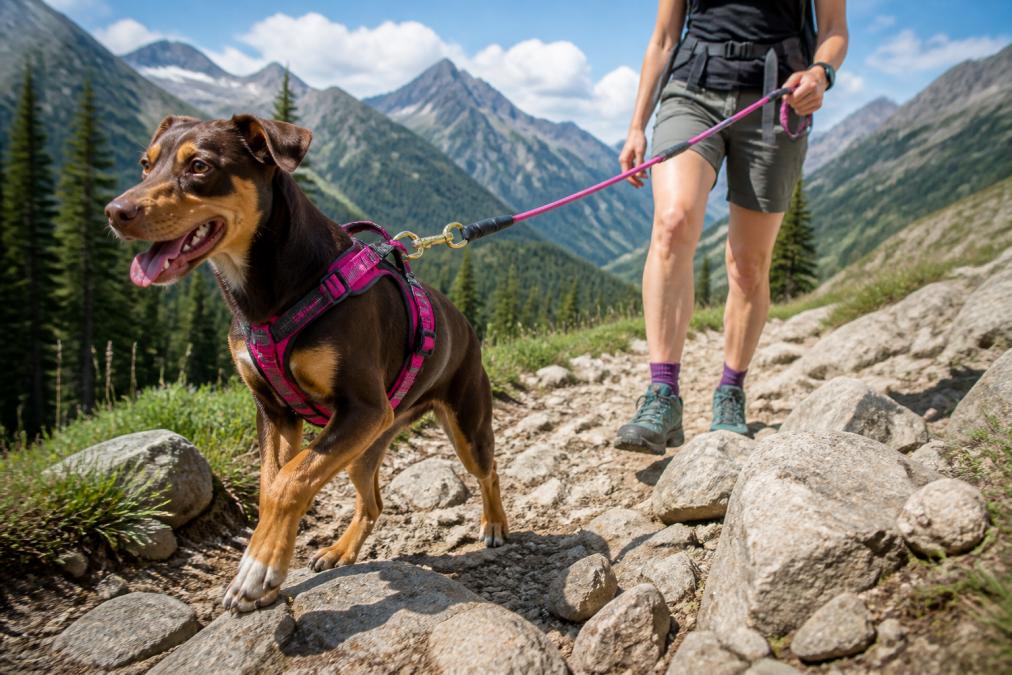
The data is clear: according to American Pet Products Association 2025 report, 58% of dog owners now use a harness, up from 39% in 2018. That shift happened for a reason. Harnesses distribute pressure across the chest and shoulders rather than concentrating it on the neck, which matters enormously on steep terrain where your dog might pull, slip, or need steadying.
For trail hiking, you need an ergonomic harness that allows freedom of movement while maintaining control. Look for designs with padded chest plates and adjustable straps that won't dig into muscle or skin during extended activity. The harness should be snug enough that your dog can't slip backward, but loose enough to fit two fingers between the material and your dog's body.
The leash itself should be lightweight but durable. The dogsRtreed Hiker-Lite Adjustable Leash ($23.99) exemplifies this: it weighs just 8.6 ounces, offers three adjustable lengths via bolt snaps, and lays flat against your body when worn over the shoulder. For most day hikes, this is all you need.

For multi-dog situations or situations requiring dogs to be secured at camp, the dogsRtreed DOG SAFETY TRAVEL TIE-OUTS ($66.99) solve the tangling problem entirely. The modular system uses 5-foot spacing between tie points, preventing dogs from wrapping around each other. The main line is rated at 4,700 pounds, and the DRT spring snaps don't freeze in cold weather, a detail that matters if you're hiking in winter conditions.
What to avoid: cheap nylon leashes that absorb water and become heavy, harnesses with thin padding that causes chafing on long hikes, and fixed-length leashes that offer no adjustment for different terrain.
Dog Hydration System for Hiking: Keeping Your Dog Cool and Hydrated
Dehydration and heat stress are the silent killers on the trail. Your dog can't tell you when they're overheating until it's too late.
A dog's normal body temperature runs 101 to 102.5 degrees. Heat exhaustion starts at 104 degrees, and heat stroke, a life-threatening emergency, begins at 106 degrees. The margin is razor-thin, especially on a sunny afternoon with sustained activity.
The dogsRhydrated Pre-Hydration & Energy Recovery System ($22.99) addresses this with a two-step approach backed by field research. Step 1 uses glycerin mixed with water before activity. Studies on sled dogs in Alaska found that this solution kept dogs' body temperature 1 to 2 degrees lower than untreated dogs while maintaining hydration across multiple days of activity. On a trail where heat stress could spike your dog's temperature from 103 to 105 degrees, that 1-2 degree buffer can be the difference between a safe hike and an emergency vet visit.
Step 2 is the recovery phase. Within 30 minutes of finishing hard exercise, your dog's muscle cells have receptors seeking carbohydrate replenishment, a window that closes quickly. The maltodextrin-based recovery formula can replace up to 60% of carbohydrate loss in minutes, reducing cramping, soreness, and fatigue for the next day's activity or next "turn out" if you're running multiple dogs.
For practical hiking, collapsible bowls are essential. A lightweight, packable bowl adds almost nothing to your pack weight but prevents your dog from drinking directly from streams, a practice that invites giardia and other waterborne parasites. Pair the hydration system with a bowl and you've covered the most critical health factor on the trail.
Paw Protection for Dogs on Rocky and Hot Terrain
Your dog's paws are engineered for natural surfaces, but modern trails present challenges: sharp rocks, hot asphalt, salt, and chemical de-icers. Without protection, a dog can develop blistered pads, cracked skin, and infections that sideline them for weeks.
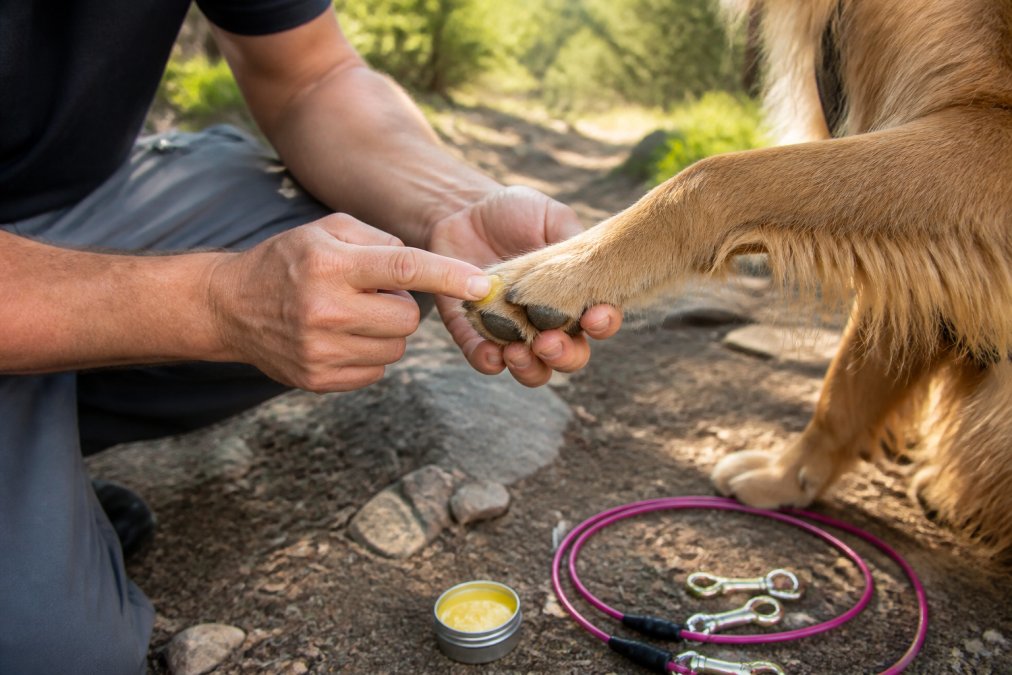
Protective balms work through a three-step approach: pre-conditioning (before activity), protecting (during activity), and promoting healing (after activity). The pawsRprotected ALL-IN-ONE PAW PROTECTOR BALM ($21.99) uses all-natural aloe, waxes, hydrating oils, and lanolin, ingredients with documented antiseptic, anti-inflammatory, and antioxidant properties. Apply it 2-3 times per week as preventive maintenance, or daily if treating problem areas.

For extreme terrain, dog booties provide the most direct protection. They shield against sharp rocks, hot ground, and chemical irritants while improving traction on slippery surfaces. The key is fit: booties that slip or bunch cause more problems than they solve. Measure your dog's paws carefully and test fit before committing to a full set.
Chemical de-icers used on winter trails are particularly harsh. They cause cracking, irritation, and toxicity if ingested during grooming. If you're hiking in winter or early spring, paw protection shifts from optional to essential.
Dog Hiking Safety Tips and Visibility Gear
Trail safety extends beyond gear to awareness and preparation. But visibility gear plays a critical role in preventing accidents, especially on crowded trails or in low-light conditions.
Reflective collars and harnesses increase visibility to other hikers and mountain bikers in low light. If you're hiking at dawn, dusk, or on overcast days, reflective elements move from nice-to-have to necessary. They're inexpensive insurance against collisions with other trail users.
GPS tracking devices have become standard for working dogs and high-drive breeds. Real-time location updates let you know instantly if your dog has wandered off-trail or gotten separated. The technology has matured significantly, most modern trackers offer 12-24 hour battery life and accuracy within 10 feet.
Trail etiquette matters as much as gear. Keep your dog on-leash in areas where it's required, yield to uphill hikers, and clean up waste. A dog that respects trail rules and other users gets welcomed back; a dog that doesn't gets banned, and the entire dog-hiking community suffers.
Critical safety rule: never hike alone with a dog in remote terrain. If your dog gets injured or you have a medical emergency, a companion can help manage the situation or call for assistance. This is non-negotiable for backcountry travel.
Dog Backpacks and First Aid Kits for Extended Adventures
For overnight trips or longer day hikes, a dog backpack lets your dog carry their own gear, water, food, shelter, reducing the load on you while building the dog's confidence and engagement with the adventure.
A well-designed dog backpack distributes weight evenly across the shoulders and spine, with padding that prevents chafing. The dogsRtreed product ecosystem includes backpack-compatible gear designed specifically for working dogs and outdoor adventures. The key is load distribution: a dog should never carry more than 25% of their body weight, and the pack should sit high on the shoulders, not sag toward the hindquarters.
For medical emergencies, the dogsRtreed FIRST-AID MEDICAL FIELD MOLLE PACK ($109.99) is purpose-built for trail use. At 1.5 pounds fully loaded, it's compact enough to clip to your pack or wear on a belt. It includes a sterile skin stapler, blood clotting powder ($13.00 separately), tourniquets, sutures, and antiseptic supplies suitable for both dogs and humans. The bright orange color makes it instantly visible in a crisis.
Blood clotting powder is the most underrated item in a trail medical kit. A deep laceration from a sharp rock or stick can bleed profusely. Clotting powder stops moderate to severe bleeding in seconds, far faster than pressure bandages alone. For rough terrain, this is essential.
A field medical kit isn't a replacement for veterinary care. If your dog sustains a serious injury, your goal is stabilization and rapid evacuation to a vet clinic. The kit buys you time and prevents shock.
Dog Hiking Safety Tips and Visibility Gear
Trail safety extends beyond gear to awareness and preparation. But visibility gear plays a critical role in preventing accidents, especially on crowded trails or in low-light conditions.
Reflective collars and harnesses increase visibility to other hikers and mountain bikers in low light. If you're hiking at dawn, dusk, or on overcast days, reflective elements move from nice-to-have to necessary. They're inexpensive insurance against collisions with other trail users.
GPS tracking devices have become standard for working dogs and high-drive breeds. Real-time location updates let you know instantly if your dog has wandered off-trail or gotten separated. The technology has matured significantly, most modern trackers offer 12-24 hour battery life and accuracy within 10 feet.
Trail etiquette matters as much as gear. Keep your dog on-leash in areas where it's required, yield to uphill hikers, and clean up waste. A dog that respects trail rules and other users gets welcomed back; a dog that doesn't gets banned, and the entire dog-hiking community suffers.
Critical safety rule: never hike alone with a dog in remote terrain. If your dog gets injured or you have a medical emergency, a companion can help manage the situation or call for assistance. This is non-negotiable for backcountry travel.
Gear Comparison and Selection Guide
The table below summarizes the core gear categories and how to choose based on your situation:
| Gear Category | Best Option | Price | Best For | Key Consideration |
|---|---|---|---|---|
| Harness & Leash | dogsRtreed Hiker-Lite | $23.99 | Day hikes, all breeds | Lightweight, adjustable, durable cable |
| Hydration System | dogsRhydrated 2-Step | $22.99 | Extended activity, heat | Pre-hydration & recovery formula |
| Paw Protection | pawsRprotected Balm | $21.99 | Rocky/hot terrain | All-natural, preventive & healing |
| Multi-Dog Containment | dogsRtreed Tie-Out System | $66.99 | Camp, events, travel | Prevents tangling, modular design |
| First Aid Kit | dogsRtreed Field Pack | $109.99 | Remote/overnight hiking | Sterile, compact, dual-use supplies |
| Gear Storage | dogsRtreed Logo Bag | $23.99 | Organization on trips | Heavy-duty canvas, fits tie-outs |
| Heat Bundle | DOG CARE HEAT BUNDLE | $135.00 | Spring/summer activity | Hydration + paw care combined |
Conclusion
Dog hiking gear isn't about having the most equipment. It's about having the right equipment for your dog, your terrain, and your climate. The research is clear: the pet industry is growing because dog owners are including their dogs in more aspects of their lives. That's a positive trend, but it only works if you equip your dog properly.
Start with a solid harness and leash, add hydration and paw protection, and build from there based on your real-world needs. dogsRtreed's integrated product ecosystem, combining the Hiker-Lite Leash, dogsRhydrated system, pawsRprotected balm, and field medical kit, gives you a foundation that covers the essentials. Get started with dogsRtreed and keep your dog safe, hydrated, and adventure-ready on every trail.
=== FAQ ANSWERS (audit these too, same rules) ===
[1] Q: What is the most essential dog hiking gear to start with? A: A durable, adjustable harness and leash form the foundation of safe dog hiking gear. According to the American Pet Products Association, 58% of dog owners now use harnesses for outdoor activities, up from 39% in 2018. Add a collapsible water bowl, waste bags, and a basic first aid kit. For longer hikes, a dog hydration system helps maintain peak performance, especially in warm weather.
[2] Q: How do I keep my dog hydrated during long hikes? A: A dog hydration system for hiking should include pre-hydration before the trail and energy recovery after exercise. Studies on working dogs found that pre-hydration with a glycerin solution can lower body temperature by 1-2 degrees, which is critical since heat exhaustion starts at 104 degrees for dogs. Offer water frequently at trail breaks and carry a collapsible bowl. The dogsRhydrated system ($22.99) provides both pre-activity hydration and post-exercise recovery in an easy-to-mix format.
[3] Q: Do dogs really need paw protection on trails? A: Yes, especially on rocky, hot, or rough terrain. Paw protection for dogs prevents cuts, burns, and pad damage that can sideline your hiking plans. Protective balms like pawsRprotected ($21.99) use a three-fold approach: pre-conditioning before hikes, protecting during activity, and promoting healing afterward. All-natural formulas with aloe and lanolin reduce soreness and support skin health without toxic ingredients that could harm your dog if licked.
[4] Q: What dog hiking safety tips should I follow for multi-dog trips? A: Dog hiking safety tips include using individual leashes or a gang line system for secure containment. The DOG SAFETY TRAVEL TIE-OUTS by dogsRtreed ($66.99) prevent tangling with 5-foot spacing between dogs and 360-degree swivels on each lead. Always carry a first aid kit rated for field use, bring reflective gear for low-light conditions, and maintain proper load distribution if your dog carries a backpack. Never exceed 25% of your dog's body weight in gear.

Frequently Asked Questions
What is the most essential dog hiking gear to start with?
A durable, adjustable harness and leash form the foundation of safe dog hiking gear. According to the American Pet Products Association, 58% of dog owners now use harnesses for outdoor activities, up from 39% in 2018. Add a collapsible water bowl, waste bags, and a basic first aid kit. For longer hikes, a dog hydration system helps maintain peak performance, especially in warm weather.
How do I keep my dog hydrated during long hikes?
A dog hydration system for hiking should include pre-hydration before the trail and energy recovery after exercise. Studies on working dogs found that pre-hydration with a glycerin solution can lower body temperature by 1-2 degrees, which is critical since heat exhaustion starts at 104 degrees for dogs. Offer water frequently at trail breaks and carry a collapsible bowl. The dogsRhydrated system ($22.99) provides both pre-activity hydration and post-exercise recovery in an easy-to-mix format.
Do dogs really need paw protection on trails?
Yes, especially on rocky, hot, or rough terrain. Paw protection for dogs prevents cuts, burns, and pad damage that can sideline your hiking plans. Protective balms like pawsRprotected ($21.99) use a three-fold approach: pre-conditioning before hikes, protecting during activity, and promoting healing afterward. All-natural formulas with aloe and lanolin reduce soreness and support skin health without toxic ingredients that could harm your dog if licked.
What dog hiking safety tips should I follow for multi-dog trips?
Dog hiking safety tips include using individual leashes or a gang line system for secure containment. The DOG SAFETY TRAVEL TIE-OUTS by dogsRtreed ($66.99) prevent tangling with 5-foot spacing between dogs and 360-degree swivels on each lead. Always carry a first aid kit rated for field use, bring reflective gear for low-light conditions, and maintain proper load distribution if your dog carries a backpack. Never exceed 25% of your dog's body weight in gear.
This article was written using GrandRanker