
Why Working Dogs Need Nutritional Recovery
Table of Contents
- The Metabolic Demands of Working Dogs vs. Household Pets
- How to Keep Dogs Hydrated While Hunting and Training
- Post-Exercise Nutrition for Performance Dogs: Timing and Macronutrients
- Protein, Carbohydrates, and Fat: Rebuilding After Work
- Signs of Canine Muscle Fatigue and Incomplete Recovery
- Creating a Recovery Plan for Your Working Dog
- Conclusion: Peak Performance Starts With Recovery
- Frequently Asked Questions
Last Updated: September 3, 2026
According to Vertex AI Search's 2025 analysis, the U.S. dog food market reached $46.90 billion in 2025 and is forecast to surpass $62.10 billion by 2034. But here's what most dog owners miss: market growth is driven by owners who understand that why working dogs need nutritional recovery separates peak performers from burned-out canines. Working dogs operate at metabolic intensities that standard household pets never reach, creating a nutritional crisis most handlers don't see until performance tanks.
At dogsRtreed, we've spent decades working with active dog owners. We've seen what happens when recovery nutrition gets overlooked: muscle breakdown accelerates, joint stress compounds, hydration deficits persist, and performance tanks. Dogs fed with intentional post-work nutrition protocols show measurable improvements in stamina, faster recovery between sessions, and longer working careers.
Below, we'll walk you through exactly why working dogs need nutritional recovery, how to implement it, and what specific signs tell you your dog isn't recovering properly.
The Metabolic Demands of Working Dogs vs. Household Pets
Working dogs operate in a completely different metabolic universe than household companions. A sedentary household dog might need 700-900 kcal per day. A working dog in hard training typically requires 1,500-2,500 kcal per day, depending on size and intensity. That's a 2-3x multiplier. Working dogs can need 2-3 times more calories per day than a sedentary pet dog of the same size, according to Vertex AI Search's working dog nutrition analysis.
When a working dog exercises, muscle glycogen depletes rapidly, muscle fibers develop micro-tears, electrolytes flush out through sweat, and oxidative stress rises. A household pet recovers from a 20-minute walk with a nap. A working dog's body is still in active recovery mode 24-48 hours after a demanding work session.
Most handlers feed their working dogs the same kibble they'd give a pet, just in larger portions. The caloric volume might be higher, but the nutrient timing, macronutrient profile, and micronutrient density aren't calibrated for recovery. That's like refueling a race car with regular unleaded, the tank gets filled, but the engine doesn't get what it needs to perform.
How to Keep Dogs Hydrated While Hunting and Training
Hydration is foundational to every system that enables recovery. Yet most handlers treat water like it's optional.
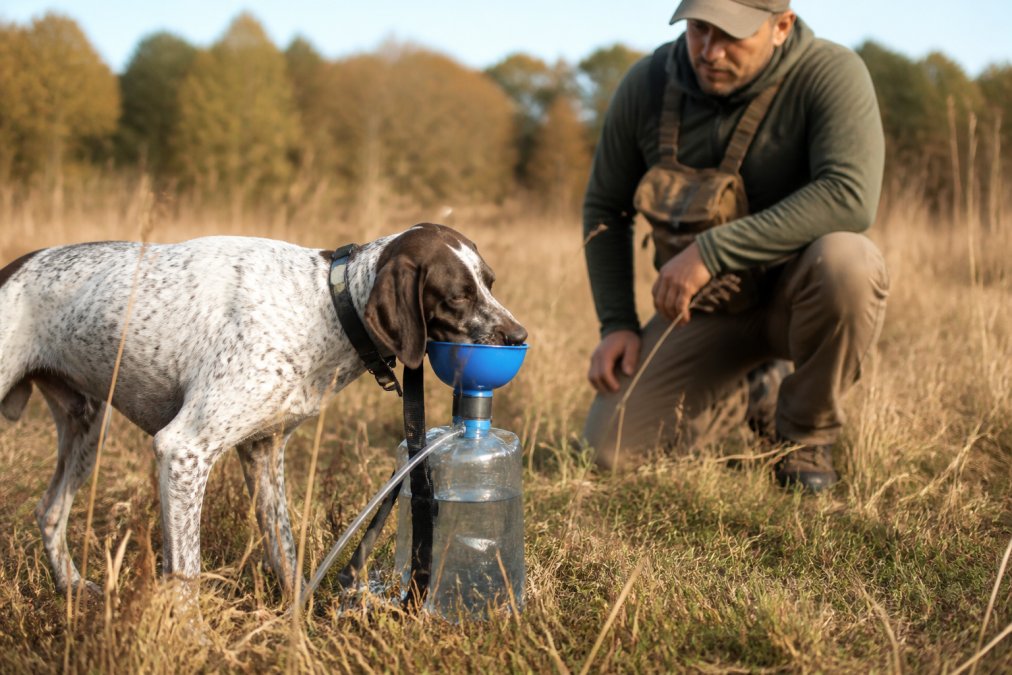
Working dogs lose hydration through panting, sweat from paw pads, and increased respiratory water loss during sustained aerobic work. In hot conditions or during intense effort, a working dog can lose hydration reserves faster than it can replace them by drinking from a bowl. Dogs consuming fresh whole foods absorbed 40% more total daily water overall compared to those on dry kibble, despite drinking less from their bowls, according to recent veterinary clinical trials.
Before work: Offer water 2-3 hours before exercise. A light drink 15-20 minutes before is acceptable, but bulk hydration should come earlier.
During work: For sessions under 60 minutes, water breaks every 15-20 minutes are sufficient. For longer sessions, offer small amounts frequently, not a full bowl.
Immediately post-work: Offer water first, in small amounts. Let the dog drink, rest 5-10 minutes, then offer more. Rushing a large volume of cold water into an overheated dog can trigger gastric upset.
Recovery phase: The first 4-24 hours post-work is when hydration recovery accelerates. Fresh, moisture-rich foods support this process more effectively than dry kibble alone.
The dogsRhydrated hydration and energy recovery system ($22.99) from dogsRtreed addresses this timing challenge directly, pairing immediate post-work hydration support with nutrient timing.

Post-Exercise Nutrition for Performance Dogs: Timing and Macronutrients
The window between exercise and recovery nutrition is where the real work happens. Studies performed in sled dogs showed that postexercise supplementation with maltodextrin within 30 minutes of exercise increased skeletal muscle glycogen within 4-24 hours, returning muscle glycogen to baseline concentrations before the next day's exercise, according to research from the University of Alaska - Fairbanks. That's the difference between a dog entering the next work session fully recovered versus partially depleted.
Immediate postexercise carbohydrate supplementation in sled dogs leads to increased glucose concentration, which promotes a more rapid rate of muscle glycogen repletion in the first 4 hours of recovery, according to research from Cornell University.
Timing window: Offer a recovery meal 60-90 minutes post-work. This allows core body temperature to normalize and the digestive system to be ready for nutrient absorption.
Macronutrient profile: A strong recovery meal includes high-quality protein (for muscle repair), adequate fat (for sustained energy), and carbohydrates (for glycogen replenishment). High-intensity, short-duration work requires more carbohydrates. Sustained, moderate-intensity work requires more fat and protein.
Protein specifics: Working dogs need 25-30% protein minimum, but quality matters more than quantity. Leucine, a branched-chain amino acid, stimulates skeletal muscle protein synthesis, which benefits recovering dogs by helping to decrease exercise-induced proteolysis (muscle breakdown), according to research from Today's Veterinary Practice. Look for protein sources with high leucine content: chicken, beef, fish, and eggs.
Carbohydrate sources: Sweet potato, brown rice, and oats digest efficiently and provide sustained glucose availability. Avoid simple sugars that spike and crash.
The DOG CARE HEAT PRODUCT BUNDLE ($135.00) from dogsRtreed pairs hydration support with recovery nutrition guidance, designed specifically for the post-work window.

Protein, Carbohydrates, and Fat: Rebuilding After Work
Each macronutrient plays a distinct role in recovery.
Protein rebuilds tissue. Muscle fibers develop micro-tears during exertion. Protein provides the amino acids needed to repair those tears and build back stronger. Leucine stimulates skeletal muscle protein synthesis, which helps decrease exercise-induced proteolysis (muscle breakdown). For working dogs, aim for 25-30% protein in the recovery meal, with emphasis on complete amino acid profiles. Whole protein sources (chicken, beef, fish, eggs) are superior to plant-based proteins because they contain all essential amino acids in the ratios dogs need.
Carbohydrates replenish glycogen. Muscle glycogen is the primary fuel source for sustained work. Postexercise carbohydrate supplementation accelerates glycogen repletion in the first 4 hours of recovery. For a 50-pound working dog, aim for 150-250 grams of carbohydrates post-work, particularly after high-intensity sessions.
Fat sustains energy and supports nutrient absorption. Fat slows digestion, providing sustained energy that supports the extended recovery process. It also facilitates absorption of fat-soluble vitamins (A, D, E, K) that support immune function and tissue repair. For working dogs, aim for 15-20% fat in the recovery meal.
Signs of Canine Muscle Fatigue and Incomplete Recovery
Most handlers don't track recovery metrics. They watch for obvious lameness but miss earlier signals that a dog isn't recovering properly.
Early signs of incomplete recovery:
Elevated resting heart rate 12+ hours post-work. A working dog's resting heart rate should return to baseline within 2-4 hours. If it stays elevated, recovery hasn't progressed normally.
Reluctance to engage in play or training the day after work. This signals muscle soreness or glycogen depletion limiting the dog's willingness to move.
Stiff movement or shortened stride 24 hours post-work. This indicates muscle soreness or joint stress that hasn't resolved.
Decreased appetite or pickiness about food. A dog in proper recovery should be hungry post-work. Loss of appetite signals either overwork or inadequate recovery nutrition.
Later signs of chronic incomplete recovery:
Muscle atrophy despite continued training indicates the dog isn't recovering protein adequately.
Increased injury frequency or joint soreness that persists accelerates joint degeneration.
Declining performance despite consistent training volume indicates metabolic depletion.
| Recovery Signal | Timeframe | What It Means | Action |
|---|---|---|---|
| Elevated resting heart rate | 12+ hours post-work | Sympathetic nervous system still activated | Increase recovery nutrition, extend rest day |
| Stiff gait or shortened stride | 24 hours post-work | Muscle soreness or joint stress | Ensure post-work nutrition within 90 min, hydrate aggressively |
| Reluctance to engage | 24-48 hours post-work | Glycogen depletion or muscle soreness | Add carbohydrates to recovery meal, consider rest day |
| Appetite loss | Immediately post-work | Digestive stress or overwork | Wait 60-90 min before offering recovery meal |
| Muscle atrophy over weeks | Chronic | Protein recovery inadequate | Increase protein percentage, ensure amino acid completeness |
Creating a Recovery Plan for Your Working Dog
Recovery is a system that compounds over time.
Step 1: Establish baseline metrics. Measure resting heart rate (60 seconds when calm), body condition score (working dogs should be 3.5-4.5 on a 1-9 scale), and post-work behavior.
Step 2: Calculate caloric needs. A working dog in moderate training needs 1.5-2x the calories of a sedentary dog. A dog in hard training needs 2-3x. Adjust based on body condition.
Step 3: Structure the recovery meal. Post-work, offer a meal within 60-90 minutes that includes high-quality protein (25-30%), digestible carbohydrates (3-5g per pound of body weight), and adequate fat (15-20%).
Step 4: Implement hydration protocol. Water before work (2-3 hours prior), small frequent offerings during work, small amounts immediately post-work, then aggressive hydration support during the first 4-24 hours of recovery.
Step 5: Schedule rest strategically. Working dogs need 1-2 complete rest days per week. On rest days, reduce caloric intake slightly but maintain nutrient density.
Step 6: Monitor and adjust. Track resting heart rate weekly, photograph body condition monthly, and note changes in behavior, appetite, or movement quality. Adjust macronutrient ratios or meal timing based on observations.
Ursolic acid, a natural compound, inhibits mRNA expression changes associated with muscle atrophy, which helps improve exercise performance and functional muscle health in dogs, according to research from DVM360. Probiotics, omega-3 fatty acids, electrolytes, and antioxidants represent supplement categories that make a measurable difference for working dogs in hard training.
Conclusion: Peak Performance Starts With Recovery
Why working dogs need nutritional recovery isn't a luxury consideration, it's the foundation that separates dogs with long, healthy working careers from those that burn out early or develop chronic injuries. The metabolic demands of sustained work create a recovery debt that standard pet nutrition can't repay.
The dogsRtreed team has built our entire approach around this principle. Our dogsRhydrated hydration and energy recovery system ($22.99) is designed to make post-work nutrition timing simple and consistent. The DOG CARE HEAT PRODUCT BUNDLE ($135.00) combines hydration support with recovery nutrition guidance, eliminating the guesswork that most handlers face.
Your working dog depends on you to understand that feeding is recovery. Get the timing, macronutrient profile, and hydration strategy right, and your dog enters each work session fully recovered. Start tracking your dog's recovery metrics this week. Adjust the post-work meal timing to the 60-90 minute window. Add fresh, moisture-rich foods to support hydration. Most handlers see measurable improvements in stamina, movement quality, and willingness to work within 4 weeks. That's recovery nutrition working the way it's supposed to.
Frequently Asked Questions
How soon after exercise should a working dog receive nutritional recovery?
Nutritional recovery should begin within 30 minutes of intense exercise. Research from the University of Alaska-Fairbanks shows that post-exercise supplementation with carbohydrates within 30 minutes increased skeletal muscle glycogen within 4-24 hours, restoring muscle glycogen to baseline before the next day's exercise. Water should be offered immediately in small amounts, followed by a main recovery meal 60-90 minutes post-exercise that includes high-quality protein, adequate fat, and carbohydrates for faster glycogen replenishment.
What nutrients are most critical for canine muscle repair after work?
Protein and branched-chain amino acids (BCAAs) are essential for muscle repair. Studies show that leucine stimulates skeletal muscle protein synthesis, helping decrease exercise-induced proteolysis (muscle breakdown). Carbohydrates are equally critical, they replenish glycogen stores depleted during work. Fat supports hormone production and nutrient absorption. A balanced post-exercise meal should combine these macronutrients with micronutrients like electrolytes to restore hydration status and support metabolic recovery.
How does hydration impact the effectiveness of nutritional recovery?
Hydration is fundamental to all recovery processes. Dogs that consume fresh, whole foods absorb 40% more total daily water compared to those on dry kibble, supporting cellular repair and nutrient transport. Proper hydration regulates body temperature, cushions joints, aids digestion, and maintains energy levels. Dehydration impairs the body's ability to repair tissue and replenish glycogen stores, making consistent water intake before, during, and after work non-negotiable for canine athletes.
What is the difference between working dogs and household pets in terms of nutritional needs?
Working dogs can need 2-3 times more calories per day than sedentary household pets of the same size. Active service dogs typically require 1,500-2,500 kcal daily depending on size and intensity, while comparable household pets need only 700-900 kcal. This difference extends beyond calories, working dogs require higher protein for muscle maintenance, strategic carbohydrate timing for glycogen replenishment, and enhanced micronutrient support for joint health and oxidative stress management.
This article was written using GrandRanker