
Why Dogs Refuse Water Hiking: Solutions That Work
Table of Contents
- Why Dogs Refuse Water Hiking
- Signs of Dehydration in Dogs on the Trail
- How Much Water Should a Dog Drink While Hiking
- How to Keep Dogs Hydrated While Hunting
- Dog Electrolyte Supplements for Hiking
- Water Temperature and Taste Matter More Than You Think
- Common Mistakes That Make Water Refusal Worse
- Conclusion
Last Updated: August 30, 2026
Why Dogs Refuse Water Hiking
Almost 90% of dogs don't drink enough water, and most owners are unaware of this critical gap in their pet's health, according to Dataintelo research published in August 2026. When dogs refuse water hiking, it's rarely about stubbornness, it's usually a combination of physiological and behavioral factors that catch owners off guard on the trail.
At dogsRtreed, we've spent decades working with hunting dogs and outdoor enthusiasts who face this exact problem. A dog's refusal to drink during a hike isn't random. It stems from how canine hydration actually works, what's happening in their body during exertion, and how the trail environment triggers stress responses that override their thirst mechanism.
Here's what most guides get wrong: they treat water refusal as a training issue when it's actually a physiology issue. By the time a dog actively seeks water, dehydration may already be developing. This is why regular hydration breaks are the safer approach, rather than waiting for visible signs of thirst. Dogs don't always regulate their hydration well during exercise, so offering water frequently, rather than waiting for signs of thirst, helps prevent dehydration.
The good news is that understanding why dogs refuse water hiking gives you concrete tools to fix it. We'll walk you through the science, the warning signs, and the practical strategies that actually work on the trail.
Signs of Dehydration in Dogs on the Trail
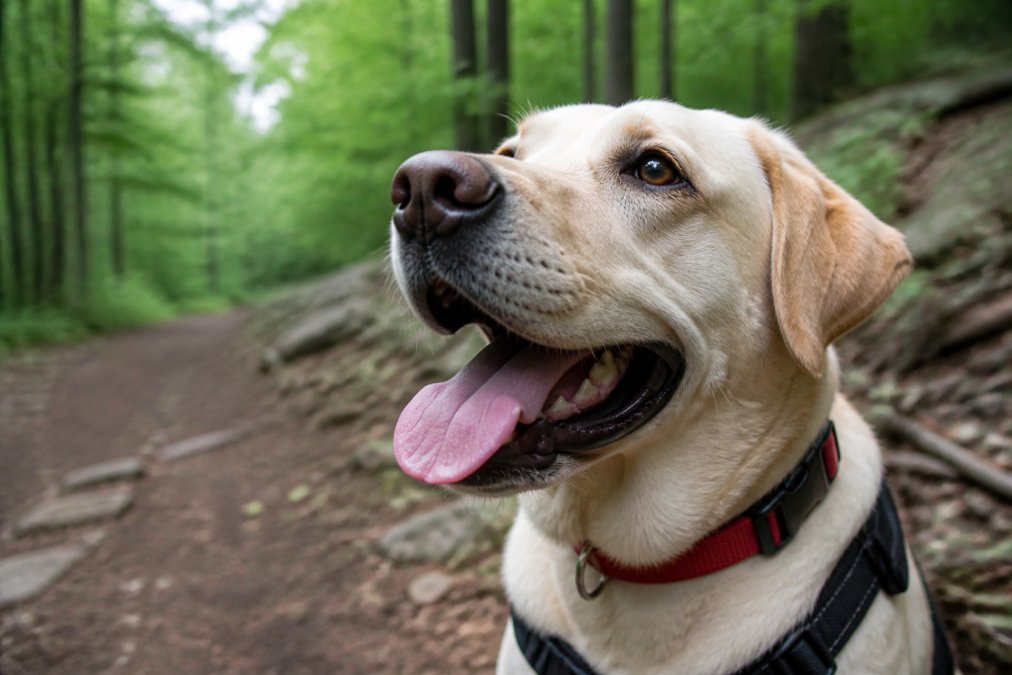
Dehydration in dogs progresses in stages, and catching it early makes all the difference. A dog in early dehydration will appear slightly less responsive, may pant more than the exertion warrants, and will often refuse water even when offered. This creates a dangerous feedback loop: the dog is already dehydrated, which makes them less likely to drink, which accelerates dehydration further.
The most reliable early indicator is the skin tenting test. Gently pull the skin on the back of your dog's neck. If it snaps back immediately, hydration is normal. If it takes a few seconds to return to place, mild dehydration is present. This simple field test works because dehydrated skin loses elasticity.

Watch for these additional signs during and after hiking:
- Excessive panting that doesn't match the exertion level
- Lethargy or reduced enthusiasm for the trail
- Dry mucous membranes (gums should be wet and pink, not tacky)
- Sunken eyes
- Loss of appetite or refusal of treats
- Vomiting or diarrhea
Dehydration at 5% of body weight starts degrading a dog's function, according to ViTAC Solutions research. At 10-15% of body weight, dehydration becomes life-threatening. A 50-pound dog losing just 2.5 pounds of water is already experiencing functional decline.
The tricky part: a dog showing these signs is already compromised. Prevention through frequent water breaks is far more effective than treatment after the fact.
How Much Water Should a Dog Drink While Hiking
Under normal conditions, dogs need about 1 ounce of water per pound of body weight per day, according to American Kennel Club guidance via SFGATE. But hiking isn't normal conditions. Dogs' water requirements can multiply by 2-3 times during active hiking, depending on conditions, according to Justin McAllister via ViTAC Solutions.
This means a 50-pound dog that needs 50 ounces daily at rest might require 100-150 ounces during an active hike. That's roughly 3-5 quarts for an 8-hour outing. The actual amount depends on:
- Elevation gain and terrain difficulty
- Ambient temperature and humidity
- Your dog's age, fitness level, and coat type
- Duration and intensity of the hike
The frequency matters as much as the volume. During active summer hiking, offer water every 15-30 minutes, according to ViTAC Solutions. This frequency helps prevent dehydration and avoids bloat, especially in deep-chested breeds prone to gastric dilatation-volvulus.
Small amounts are preferable to large gulps. A dog that drinks too much at once risks bloat, which is a medical emergency. Offering 4-8 ounces every 15-20 minutes is safer than a single large drink.
Temperature matters here too. Warm water is absorbed more efficiently than cold water, especially after exertion. Many experienced hikers bring room-temperature water or slightly warm water rather than ice-cold drinks from a cooler.
How to Keep Dogs Hydrated While Hunting
Keeping dogs hydrated while hunting requires a different strategy than casual hiking. Hunting involves bursts of intense activity followed by periods of waiting, often in high-stress situations where dogs are focused on game rather than their own needs.
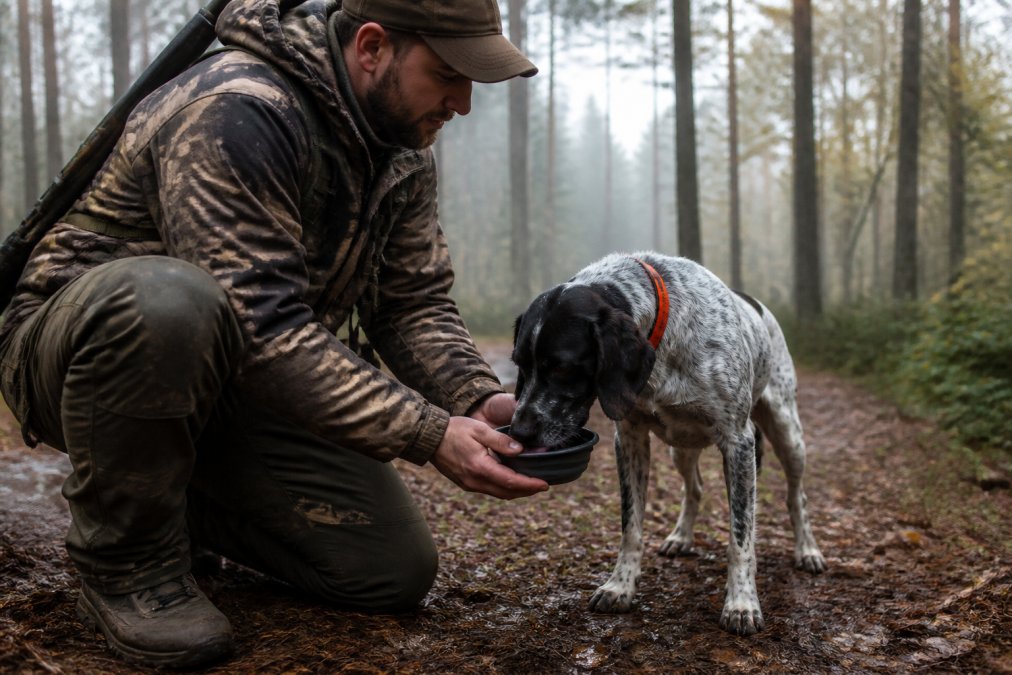
The first rule: don't wait for your dog to ask. Hunting dogs are driven by prey drive, which overrides their thirst response. A dog chasing a bird or tracking a scent won't stop to drink even if severely dehydrated. This is where proactive hydration breaks become essential.
Set a timer or use landmarks to establish regular water breaks every 20-30 minutes during active hunting. This feels frequent, but it's the difference between peak performance and a dog that's already starting to decline. A portable collapsible bowl is non-negotiable for hunting, it lets you offer water anywhere without needing a water source.
Bring more water than you think you'll need. A 2-liter hydration pack designed for dogs is a reasonable baseline for a full day of hunting. Distribute it across multiple water bottles so you're not carrying all the weight at once.
Watch your dog's behavior during breaks. A hunting dog that refuses water is already showing early dehydration signs. Don't push it, offer water, wait a few minutes, and try again. Some dogs respond better to water offered in a specific way: from your hand, from a bowl, or at a different temperature.
The dogsRhydrated hydration and energy recovery system addresses this exact problem. It's a 2-step system designed to make hydration convenient and to encourage dogs to actually drink. The first step is a hydration formula that makes plain water more palatable, which matters when your dog is reluctant. The second step is a nutritional recovery formula that replenishes electrolytes and energy after exertion, something plain water alone can't do.

Dog Electrolyte Supplements for Hiking
This is where most hikers miss a critical piece of the puzzle. Plain water replaces volume, but it doesn't replace electrolytes lost through sweat and panting. A dog that drinks only plain water during intense activity can develop electrolyte imbalance, which degrades performance and recovery even if they're technically hydrated.
Research from the University of Pennsylvania found that dogs receiving a chicken-flavored electrolyte drink drank significantly more fluid and maintained greater hydration levels compared to plain water, without suffering from sodium buildup. This tells you two things: palatability drives consumption, and electrolyte supplementation works.
Electrolytes, sodium, potassium, magnesium, and chloride, are essential for muscle function, nerve signaling, and fluid retention. During a hard hike or hunt, a dog loses these through panting and sweating (through paw pads). Replacing them accelerates recovery and prevents the lethargy that often follows intense activity.
The best electrolyte supplements for hiking dogs come in powder form that dissolves in water. Look for formulas specifically designed for canine physiology, not human sports drinks. Human electrolyte drinks often contain sweeteners and ingredients that upset a dog's stomach.
Add electrolytes to water during breaks, but also consider them part of post-hike recovery. A dog that gets electrolyte supplementation in the hours after a hard hike recovers faster and is ready for the next outing sooner. This is especially important for working dogs that hunt multiple days in a row.
The dogsRhydrated system includes both hydration support and nutritional recovery in a 2-step approach. Step one encourages drinking during activity. Step two replenishes what the dog lost, which is the part that separates adequate recovery from optimal recovery.
Water Temperature and Taste Matter More Than You Think
Most hikers assume all water is the same. It's not. Temperature and taste dramatically affect whether a dog will actually drink.
Cold water, ice-cold water from a cooler, is less efficiently absorbed than room-temperature or warm water. After exertion, a dog's digestive system is already stressed. Ice-cold water can trigger nausea or cramping. Room-temperature water is absorbed faster and causes less gastric distress.
But temperature is secondary to taste. A dog that refuses plain water might drink eagerly if that water has a familiar flavor. This is where the "reactive drinker" problem becomes clear: many dogs won't drink until they're already mildly dehydrated, which creates a window where taste and temperature matter enormously.
Some dogs develop water bowl aversion or water source phobia. This sounds unusual, but it's more common than most guides acknowledge. A dog that had a negative experience with water, choking, being forced to drink, or associating a specific bowl with stress, may refuse water from that source. Switching to a different bowl, offering water from your hand, or using a collapsible bowl instead of a rigid one can solve this overnight.
Herbal teas and bone broths add flavor without the risks of commercial additives. Adding warm bone broths to daily meals can provide enticing flavors that stimulate natural thirst and support canine hydration, according to Vondis. This works especially well for dogs that are hesitant drinkers.
The taste factor also explains why electrolyte supplements work. A chicken-flavored or beef-flavored electrolyte formula isn't just more palatable, it's more likely to be consumed before dehydration becomes severe. This shifts the hydration strategy from reactive (waiting for thirst) to proactive (encouraging drinking before thirst signals appear).
Common Mistakes That Make Water Refusal Worse
The mistakes most hikers make are logical but counterproductive. Understanding these prevents you from accidentally making the problem worse.
Mistake 1: Forcing water. Pushing a dog to drink when they're reluctant backfires. A dog that feels forced may develop aversion to water or to the person offering it. Instead, offer water, step back, and let the dog approach it on their own terms. This is especially true for stressed or anxious dogs.
Mistake 2: Assuming thirst will kick in. It won't. By the time a dog is urgently seeking water, dehydration may already be developing. Relying on your dog's thirst response is waiting for a warning light that comes too late. Proactive hydration breaks work because they prevent the dehydration that triggers thirst.
Mistake 3: Offering only plain water. Plain water has no flavor incentive and no electrolyte benefit. A dog that's already mildly dehydrated and stressed is even less likely to drink it. Adding flavor or electrolytes increases consumption significantly.
Mistake 4: Ignoring stress and anxiety. Stress and anxiety, such as from travel or a new experience like hiking, can decrease a dog's water intake. Additionally, drinking is a vulnerable position for dogs, and if they don't feel safe, they may not relax enough to drink. A dog that's nervous about the trail environment won't drink even if water is available. Creating a sense of safety, finding quiet spots away from other hikers, letting the dog rest before offering water, matters.
Mistake 5: Using unsafe water sources without filtration. Natural water sources on trails are often unsafe due to pathogens like Leptospira and Giardia, which are prevalent in 90% of backcountry streams, according to Torus Pet. A dog that gets sick from contaminated water develops aversion to drinking from natural sources. Always carry treated water or use a portable filter.
Mistake 6: Skipping recovery hydration. Hydration doesn't stop when the hike ends. A dog that drank adequately during the hike still needs continued hydration and electrolyte replenishment in the hours after. Skipping this phase slows recovery and increases the risk of complications.
Conclusion
Dogs refuse water hiking because of a combination of physiological factors, their thirst mechanism lags behind their hydration needs, stress overrides their natural drive to drink, and plain water alone doesn't address electrolyte loss. The solution isn't complicated, but it requires understanding the science and acting proactively rather than reactively.
Start with frequent water breaks every 15-30 minutes during active hiking. Bring more water than you think you'll need, offer it at room temperature, and don't force it. Consider adding electrolyte supplementation to encourage drinking and support recovery. For dogs that refuse plain water, flavored hydration formulas and electrolyte supplements make a measurable difference.
The dogsRhydrated 2-step hydration and nutritional recovery system is designed specifically for this problem. It encourages dogs to drink during activity and supports full recovery afterward, keeping your dog cool, hydrated, and at peak performance during all your outdoor pursuits. Get started with dogsRhydrated and ensure your dog stays properly hydrated on every adventure.
Frequently Asked Questions
Is it normal for a dog to refuse water while hiking?
Yes, it's surprisingly common. Dogs often become so focused on trail excitement that they ignore thirst cues. The problem is that by the time a dog actively seeks water, dehydration has already begun affecting their performance. Research shows almost 90% of dogs don't drink enough water, and most owners are unaware of this gap. Offering water proactively every 15-30 minutes prevents this cycle from starting.
What are the signs of dehydration in dogs on the trail?
Early signs include excessive panting beyond what exertion warrants, slight lethargy, and refusal to drink even when water is offered. Check mucous membranes: they should be wet and pink. Perform a skin tenting test by gently pulling the skin on the shoulder blade; it should snap back immediately. At 5% body weight dehydration, a dog's function degrades noticeably. At 10-15%, it becomes life-threatening. Don't wait for urgent seeking behavior, that means dehydration is already advanced.
Should I add flavor to my dog's water to encourage drinking while hiking?
Absolutely. University of Pennsylvania research found that dogs receiving chicken-flavored electrolyte drinks drank significantly more fluid and maintained greater hydration than those offered plain water. You can add bone broth, herbal tea, or electrolyte supplements designed for dogs. This palatability boost helps overcome the refusal problem many owners face. Products like dogsRhydrated combine hydration therapy with nutritional recovery in a form dogs actually want to consume.
How much water should a dog drink while hiking?
Start with the baseline: about 1 ounce of water per pound of body weight per day under normal conditions. During active hiking, water requirements multiply by 2-3 times depending on temperature, terrain, and fitness level. A 50-pound dog needs roughly 50 ounces daily at rest, but 100-150 ounces during strenuous hiking. Offer water every 15-20 minutes in small amounts rather than one large drink, which reduces bloat risk. Adjust based on weather, elevation gain, and your dog's individual response.
This article was written using GrandRanker