
Is Expensive Dog Gear Worth It? A Real Analysis
Table of Contents
- The Real Cost of Cheap Dog Gear vs. Premium Options
- Durability and Material Quality: What Actually Lasts
- Safety Features and Hardware Integrity in Premium Gear
- Cost-Per-Use Analysis: When Expensive Dog Gear Pays Off
- Durable Dog Travel Gear for Active Dogs
- Safety Gear for Active Dogs: Performance vs. Price
- Dog Hiking Gear: Investment Pieces That Earn Their Cost
- When to Splurge and When to Save on Dog Accessories
- Frequently Asked Questions
Last Updated: September 2, 2026
The Real Cost of Cheap Dog Gear vs. Premium Options
When you're spending $851 per dog annually on average, according to Capital One Shopping's 2026 pet spending analysis, every purchase decision matters. Cheap dog gear fails predictably: a $15 budget harness breaks after three months, costing $60 annually versus $60 once for a premium option lasting five years.
The real issue is safety. A low-quality quick-release buckle jams when you need it most. Weak stitching tears under load, leaving your dog unsecured. Hardware corrodes faster, creating sharp edges that chafe or cut. These aren't minor inconveniences, they're genuine hazards.
According to Le Noof's analysis on luxury dog harnesses, "A luxury dog harness is worth it, but only if it is genuinely premium, not just premium-priced. I have bought expensive harnesses that fell apart in three months. I have also found ones that still look brand new after two years of daily walks. The difference is not the price tag. It is the materials, the hardware, and whether the brand actually designed the harness for a real dog or just for a product photo."
The pet accessories market was valued at $7.2 billion in 2025 and is projected to reach $12.3 billion by 2033, growing at a CAGR of 7.1% from 2026 to 2033, according to Grand View Research's 2026 pet accessories market report. The dog accessories segment held 46.5% of that market in 2025. When your dog's life depends on equipment, cutting costs becomes a liability.
Durability and Material Quality: What Actually Lasts
Material quality determines whether gear survives one season or ten. Premium materials like reinforced nylon, marine-grade PVC coatings, and high-tensile-strength webbing resist abrasion, weathering, and maintain structural integrity across years of hard use.
Stitch density reveals the difference: budget harnesses use 4-6 stitches per inch; premium harnesses use 10-12 or more. Extra density distributes load evenly, prevents seam separation, and creates redundancy, if one stitch fails, others hold. A single failed seam on cheap gear cascades into complete failure.
Hardware matters equally. Cheap plastic buckles crack under temperature changes and UV exposure. Cheap metal corrodes, weakening structural integrity. Premium hardware uses surgical-grade stainless steel or anodized aluminum that resists corrosion indefinitely. Quick-release mechanisms on quality gear use precision engineering; budget versions jam or fail to engage.
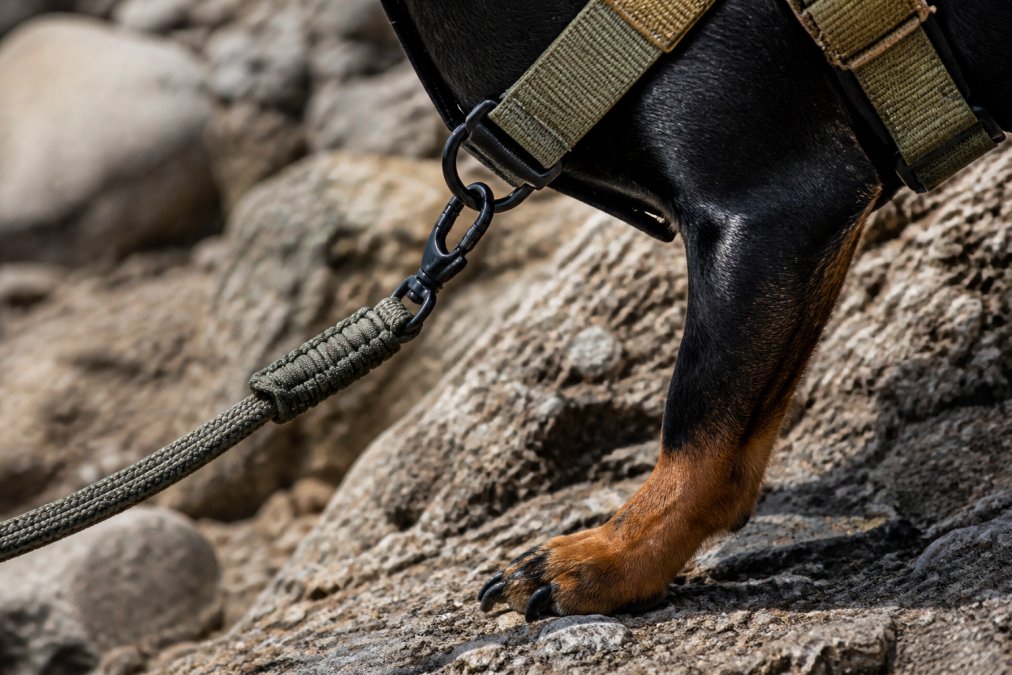
Quality materials adapt to your dog's body, distributing pressure and reducing strain. Cheap materials compress, lose shape, and create pressure points causing chafing. A $60 premium leash used daily for five years costs $12 per year. A $15 budget leash replaced annually costs $15 per year, before accounting for replacement hassle and failure risk.
Safety Features and Hardware Integrity in Premium Gear
Safety is the foundation of premium gear design. Load-bearing capacity is the first metric: premium harnesses are engineered to handle loads far exceeding your dog's weight. A 50-pound dog's sudden lunge generates forces 2-3 times body weight. Cheap harnesses handle static weight only and fail under dynamic loads.
Quick-release buckles on premium gear use precision mechanisms that release smoothly even under tension. Cheap versions jam, slip, or fail to engage. In emergencies, a dog tangled in brush or sudden injury, a stuck buckle becomes critical failure. dogsRtreed's cable leash with bolt snap uses marine-grade components for reliability under extreme conditions.

Hardware corrosion is a silent failure mode. Cheap metal begins corroding within months of moisture and salt exposure. Premium hardware resists corrosion indefinitely. A $22.99 cable leash with proper hardware outlasts five $5 alternatives.
Reinforced stitching and stress-point engineering prevent seam separation, the most common failure mode. Premium harnesses reinforce stress points with double or triple stitching, sometimes adding leather reinforcement patches. Cheap harnesses use single-stitch construction throughout.
Padding and chafing prevention matter for comfort and long-term skin health. Premium harnesses use soft, breathable padding that distributes pressure evenly. Cheap harnesses create pressure points causing hair loss and skin irritation. Dogs wearing uncomfortable gear resist wearing it, defeating the purpose.
Cost-Per-Use Analysis: When Expensive Dog Gear Pays Off
Cost-per-use reveals which purchases actually save money. A premium harness at $60 versus a budget option at $15:
- Budget harness: $15 ÷ 6 months = $2.50 per month
- Premium harness: $60 ÷ 60 months = $1.00 per month
The expensive option costs 60% less per month.
Active dogs push gear harder. A harness used 250 days per year for five years is used 1,250 times. At $60, that's $0.048 per use. A $15 harness lasting six months (150 uses) costs $0.10 per use.
The real calculation includes replacement time and safety. Buying five cheap harnesses over five years means five shopping trips, five replacements, and five periods of downtime. Premium gear means one purchase and five years of reliability. Safety failures carry costs beyond purchase price: emergency vet bills, lost dogs, or injuries dwarf any gear cost.
For dogsRtreed customers, the DOG SAFETY TRAVEL TIE-OUTS at $66.99 represent a single investment securing multiple dogs safely during camping, hunting, and travel. Compared to cheaper alternatives requiring replacement every season, the cost-per-use advantage compounds across years.

Durable Dog Travel Gear for Active Dogs
Travel gear experiences the harshest conditions: temperature extremes, moisture, abrasion, and repeated packing. Gear surviving casual walks fails under travel stress.
Durable travel gear prioritizes weatherproofing and material resilience. Marine-grade PVC coatings repel moisture while remaining flexible. Reinforced nylon webbing resists abrasion from rocks and brush. Metal hardware uses corrosion-resistant alloys surviving salt spray, rain, and humidity.
Packability matters for travel. Premium travel gear compresses efficiently without creasing or cracking. Cheap gear often cracks when folded. Temperature stability is critical: cheap plastics become brittle in cold and soft in heat. Premium materials maintain properties across temperature ranges.
Modular design separates premium travel gear from budget alternatives. Premium systems use interchangeable components, replace a worn leash without replacing the entire harness. Cheap gear uses glued or riveted construction preventing repairs.
The dogsRtreed CABLE LEASH with bolt snap at $22.99 uses components chosen for travel durability: the floating ring prevents tangling, PVC coating protects against moisture, and the bolt snap functions reliably across temperature extremes.
Safety Gear for Active Dogs: Performance vs. Price
Active dogs need safety gear engineered for high-performance scenarios. A leash working for casual walking fails when a dog lunges at wildlife or experiences sudden panic.
Performance gear prioritizes load capacity and responsiveness. High-quality harnesses distribute force across larger surface areas, reducing pressure on single points. They're engineered to prevent escape. Cheap harnesses prioritize appearance over function and fail under real-world stress.
Visibility is a safety feature often overlooked in cheap gear. Premium harnesses incorporate reflective materials, bright colors, or integrated lighting for low-visibility conditions. Multiple attachment points on premium harnesses allow handlers to control dogs more effectively. Single-attachment designs offer less control and increase injury risk.
Ergonomics for handlers is part of safety. Premium harnesses distribute weight evenly across handler's body, reducing strain and improving control. Cheap harnesses concentrate force in ways causing handler fatigue and loss of control.
For active dogs in hunting, hiking, or sport scenarios, safety gear failure isn't an inconvenience, it's a potential tragedy.
| Gear Type | Budget Option | Premium Option | Cost-Per-Use Over 5 Years | Key Difference |
|---|---|---|---|---|
| Harness | $15 (lasts 6 months) | $60 (lasts 5 years) | $0.10 vs. $0.048 | Hardware durability, stitch density |
| Leash | $8 (lasts 4 months) | $22.99 (lasts 3 years) | $0.067 vs. $0.026 | Material resilience, quick-release function |
| Tie-Out System | $25 (lasts 1 year) | $66.99 (lasts 5+ years) | $0.083 vs. $0.023 | Load capacity, spring snap reliability |
Dog Hiking Gear: Investment Pieces That Earn Their Cost
Hiking gear represents the intersection of safety, durability, and performance. A harness working for neighborhood walks fails on technical terrain. A leash adequate for casual hiking becomes dangerous on steep trails or near water.
Hiking-specific gear is engineered for dynamic loads and unpredictable terrain. Material selection reflects hiking demands: breathable, moisture-wicking fabrics prevent heat buildup during exertion. Quick-drying materials prevent mildew after wet conditions. Reinforced stress points handle repeated impacts of rocky terrain.
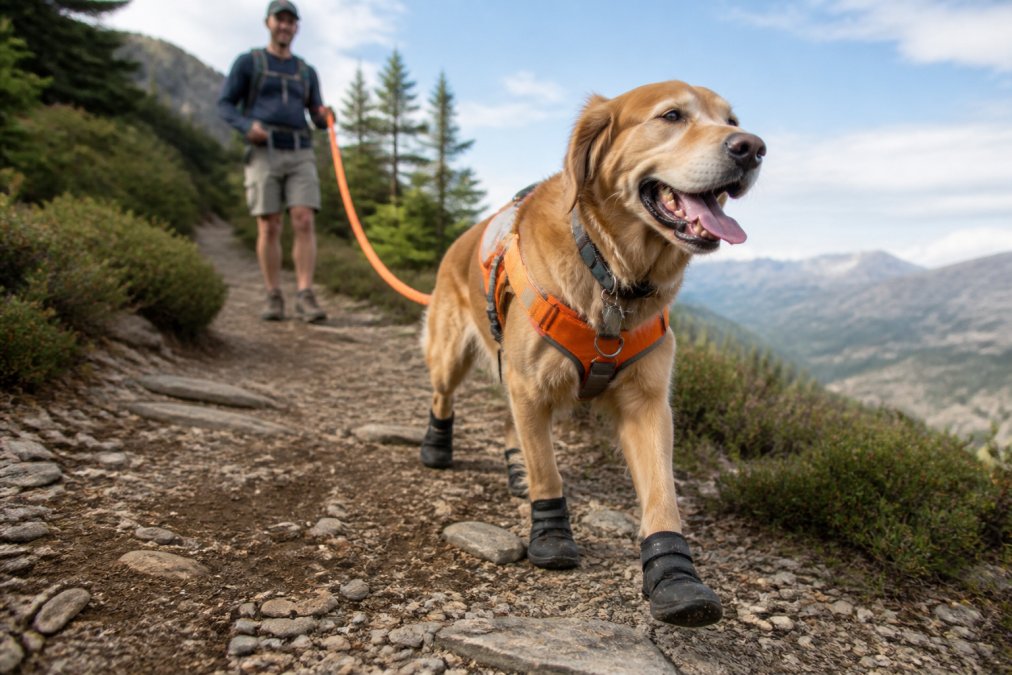
Protective elements differentiate hiking gear from casual-use alternatives. Padded chest plates protect against rock impacts. Reinforced leg panels shield against brush and sharp vegetation. Premium harnesses include integrated paw protection or attachment points for protective booties.
Dog hiking backpacks, where dogs carry their own supplies, command premium pricing ($100-$220) because quality matters intensely. Dogs carrying loads need harnesses engineered for weight distribution and comfort under sustained stress. Cheap versions create pressure points and shift during movement. Premium versions distribute weight evenly and allow dogs to perform at full capacity.
A hiking trip two hours from civilization becomes dangerous if gear fails. Premium hiking gear prevents emergencies through engineering and material quality cheap alternatives can't match. A $60 harness used 100 times per year for five years costs $0.12 per use. A $15 harness lasting one season (50 uses) costs $0.30 per use, the premium option costs 60% less per use while eliminating replacement hassle and safety risk.
When to Splurge and When to Save on Dog Accessories
The framework for smart spending matches gear quality to use intensity and safety criticality.
Splurge on safety-critical gear. Harnesses, leashes, and tie-out systems directly affect your dog's safety. Failure creates immediate danger. These items justify premium pricing because the cost of failure, injury, lost dog, emergency vet care, far exceeds gear cost. A $60 harness preventing a $3,000 emergency vet bill is a bargain.
Splurge on frequently-used gear. Items your dog wears daily experience high wear. Cost-per-use calculations show premium options become cheaper over time.
Save on occasional-use gear. Fancy coats for special occasions or seasonal items used infrequently don't justify premium pricing.
Save on puppy gear. Puppies grow quickly. Expensive harnesses become useless within months. Budget options make sense for puppies. Once dogs reach full size, switch to premium gear they'll wear for years.
Save on consumables. Treats and toys your dog destroys are consumables. Premium pricing doesn't make sense for things that get destroyed.
Splurge on custom-fit gear. If your dog has unusual size or special needs, premium gear often fits better than budget alternatives.
Consider resale value. Premium gear holds resale value on second-hand markets. A $60 harness used two years might sell for $30-$40. A $15 harness falling apart has zero resale value.
For active dog owners who travel, hunt, or hike regularly, expensive dog gear isn't a luxury, it's a necessity. The question isn't whether you can afford quality gear; it's whether you can afford the consequences of cheap alternatives. At dogsRtreed, we've built a reputation on gear engineered for real-world conditions, from our DOG SAFETY TRAVEL TIE-OUTS that secure multiple dogs safely to our CABLE LEASH systems designed for durability and reliability. When your dog's safety and your peace of mind depend on equipment, the investment in proven quality delivers returns that budget gear simply can't match. Get started with dogsRtreed and experience the difference that decades of dog handling expertise brings to every product we create.
=== FAQ ANSWERS (audit these too, same rules) ===
[1] Q: What features should you look for in high-end dog hiking gear? A: Look for reinforced stitching with high stitch density, non-toxic materials, quick-release buckles, and hardware with corrosion resistance. Premium dog hiking gear should include ergonomic design that distributes weight evenly, load-bearing capacity rated for your dog's size, and weatherproofing for outdoor conditions. Check for appropriate padding to prevent chafing, and confirm the brand provides durability testing data or warranties as proof of quality.
[2] Q: How can you tell if expensive dog gear is actually durable? A: Examine the tensile strength of materials, stitch density (higher is better), and hardware integrity by checking for reinforced attachment points. Research the manufacturer's craftsmanship standards and look for third-party durability testing results. Customer reviews mentioning wear and tear patterns over 2+ years are reliable indicators. Brands offering warranties or repair programs demonstrate confidence in their product lifespan. Compare cost-per-use over the expected life of the gear, not just the upfront price.
[3] Q: Is expensive dog gear worth it for working hunting dogs? A: Yes, for working dogs in extreme conditions. Premium safety gear with quick-release buckles and reinforced hardware prevents injury during field work and reduces material fatigue from constant use. A well-made premium harness can outlast three or four budget options, making the cost-per-use significantly better. Investing in scientifically designed safety equipment is now considered a fundamental pillar of preventative health care for working dogs.
[4] Q: What's the difference between luxury dog accessories and performance gear? A: Luxury accessories prioritize appearance and comfort, while performance gear emphasizes functional design, safety standards, and durability under stress. Performance gear includes features like load-bearing capacity ratings, abrasion resistance for rough terrain, and weatherproofing. Premium performance pieces are investment items built for repeated heavy use. Luxury items may prioritize aesthetics over tensile strength or hardware integrity. For active and working dogs, performance gear offers better long-term value and safety, even if the upfront cost is higher.
Frequently Asked Questions
[1] Q: What features should you look for in high-end dog hiking gear?
A: Look for reinforced stitching with high stitch density, non-toxic materials, quick-release buckles, and hardware with corrosion resistance. Premium dog hiking gear should include ergonomic design that distributes weight evenly, load-bearing capacity rated for your dog's size, and weatherproofing for outdoor conditions. Check for appropriate padding to prevent chafing, and confirm the brand provides durability testing data or warranties as proof of quality.
[2] Q: How can you tell if expensive dog gear is actually durable?
A: Examine the tensile strength of materials, stitch density (higher is better), and hardware integrity by checking for reinforced attachment points. Research the manufacturer's craftsmanship standards and look for third-party durability testing results. Customer reviews mentioning wear and tear patterns over 2+ years are reliable indicators. Brands offering warranties or repair programs demonstrate confidence in their product lifespan. Compare cost-per-use over the expected life of the gear, not just the upfront price.
[3] Q: Is expensive dog gear worth it for working hunting dogs?
A: Yes, for working dogs in extreme conditions. Premium safety gear with quick-release buckles and reinforced hardware prevents injury during field work and reduces material fatigue from constant use. A well-made premium harness can outlast three or four budget options, making the cost-per-use significantly better. Investing in scientifically designed safety equipment is now considered a fundamental pillar of preventative health care for working dogs.
[4] Q: What's the difference between luxury dog accessories and performance gear?
A: Luxury accessories prioritize appearance and comfort, while performance gear emphasizes functional design, safety standards, and durability under stress. Performance gear includes features like load-bearing capacity ratings, abrasion resistance for rough terrain, and weatherproofing. Premium performance pieces are investment items built for repeated heavy use. Luxury items may prioritize aesthetics over tensile strength or hardware integrity. For active and working dogs, performance gear offers better long-term value and safety, even if the upfront cost is higher.
This article was written using GrandRanker